
Green Invoicing: The Push for Paperless Billing and Sustainable AR
Switching to digital, paperless invoicing reduces environmental impact, cuts costs, and speeds up payments. Learn how sustainable AR practices and automation can improve efficiency while supporting ESG goals.

Pratheek Adi
Co-Founder & CTO

Table of contents
Share
Invoicing isn’t just an operational task. Every time a business sends a paper invoice, it contributes, often unnoticed, to environmental costs like paper consumption, carbon emissions, and waste. For service-based small and mid-sized businesses that issue hundreds or thousands of invoices per month, the shift to digital, paperless invoicing (also called e-invoicing) offers not only operational advantages but also meaningful sustainability benefits. These benefits matter not just for your company’s reputation, but also for long-term efficiency and customer relationships.
In this article, you’ll learn how green invoicing aligns accounts receivable (AR) with sustainability goals, reduces your environmental impact, and improves business performance.
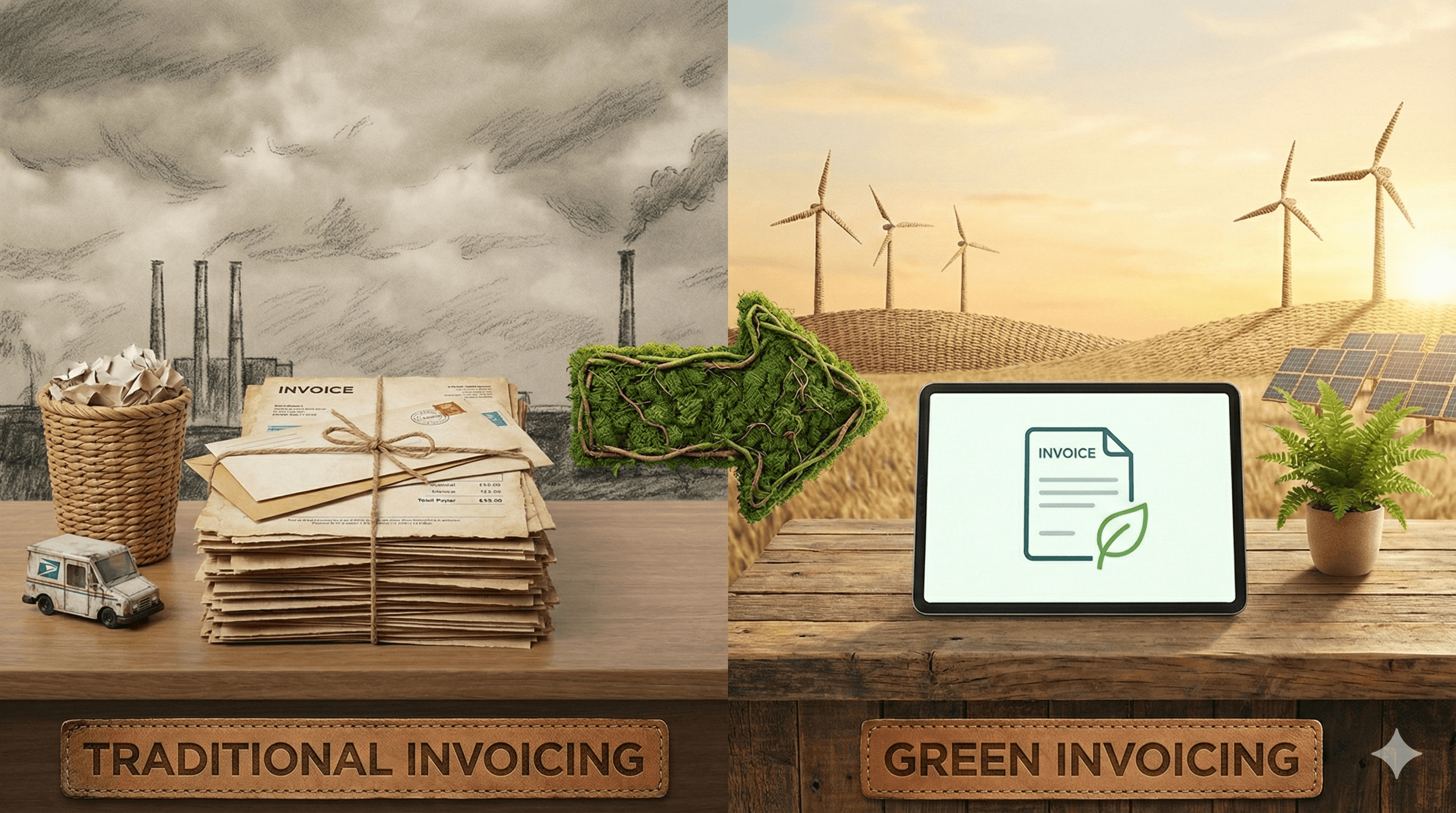
What Is Green Invoicing and Why It Matters
Green invoicing means moving away from paper-based billing toward digital methods like e-invoices issued directly through accounting systems or AR platforms. Instead of printing, folding, stamping, and mailing paper bills, e-invoices are generated and transmitted electronically.
This simple shift has multiple benefits. It helps businesses cut paper use and waste, lowers carbon emissions tied to physical delivery and storage, and contributes to broader sustainability goals such as environmental, social, and governance (ESG) commitments.
For businesses with recurring invoicing workflows, such as home services, medical clinics, professional services, and other service-based SMBs, green invoicing is a way to reduce environmental harm while speeding up payment processes.
Environmental Benefits of Going Paperless
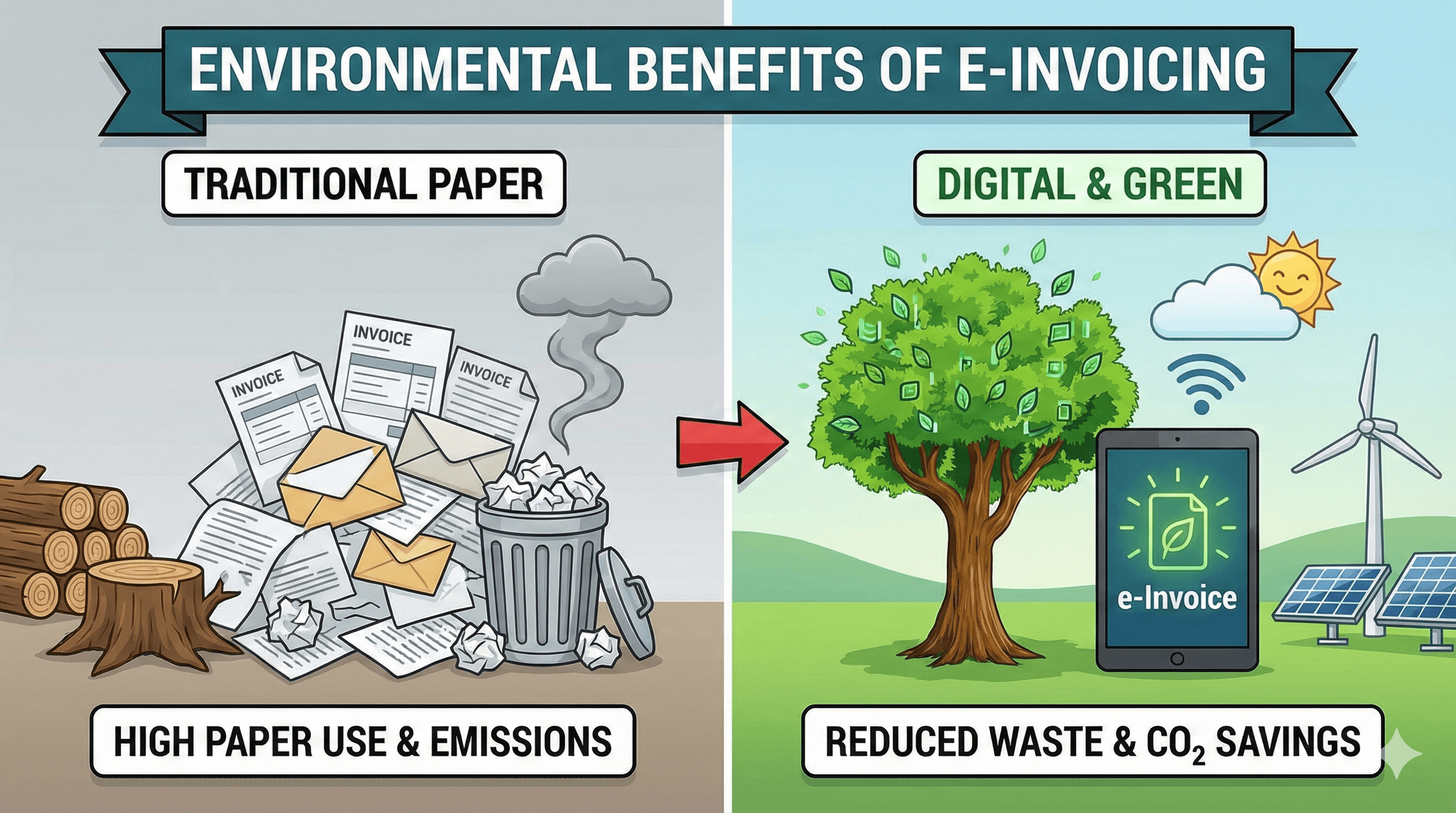
The environmental case for e-invoicing is clear and supported by studies and industry reports.
Significant Reduction in Paper Use
Traditional invoicing requires sheets of paper, envelopes, and often extra materials like printer ink and packaging. By switching to digital invoices, businesses can drastically reduce paper consumption. A global shift to e-invoices could save millions of trees and cut down on landfill waste.
Lower Carbon Emissions
Paper invoices contribute to carbon emissions in several ways: manufacturing the paper, transporting invoices by mail, and storing physical records. Digital invoices eliminate much of this chain. According to emissions analyses, paper invoicing can generate many times more CO₂ per invoice compared to electronic methods. Some studies show that e-invoicing can reduce emissions by up to 89 percent compared to paper invoices.
Less Waste and Resource Use
Paper production consumes energy, water, and chemicals; reducing reliance on it eases pressure on these resources. Digital storage and transmission also remove the need for physical filing space and help minimize waste associated with printing and disposal.
By adopting green invoicing, your AR process becomes part of a broader corporate sustainability strategy that resonates with environmentally conscious customers, partners, and employees.
Beyond the Environment: Operational Efficiency
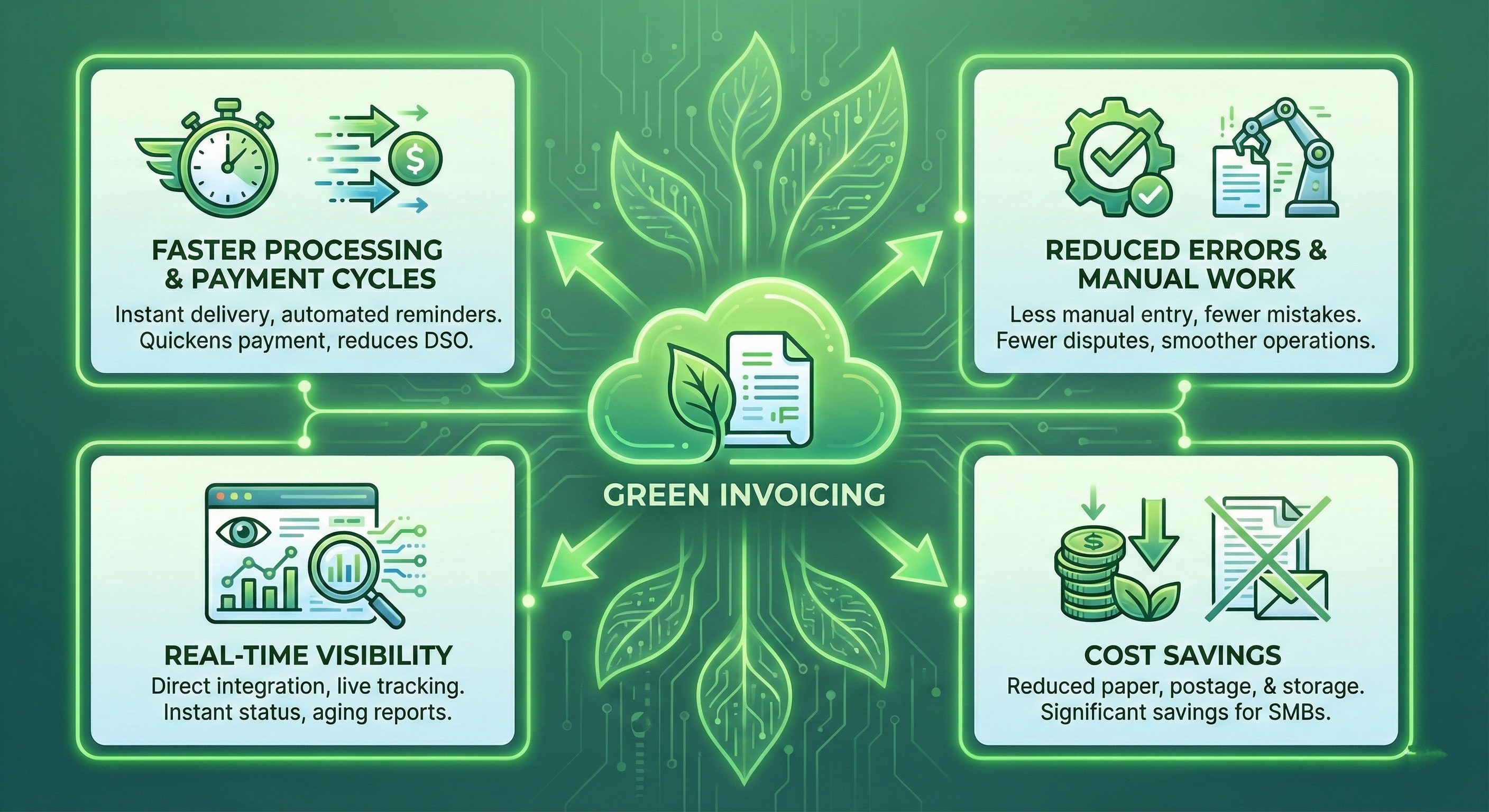
Green invoicing isn’t just good for the planet, it’s good for your business.
Faster Processing and Payment Cycles
Electronic invoices are delivered instantly, and many systems automate reminders and follow-ups. This helps customers pay more quickly and reduces days sales outstanding (DSO).
Reduced Errors and Manual Work
When invoices are generated and sent electronically, there’s less manual data entry and fewer opportunities for mistakes. That means fewer disputes, faster reconciliations, and smoother AR operations.
Real-Time Visibility
Green AR systems often integrate directly with your accounting and ERP platforms. This gives your finance team real-time tracking of invoice status, aging reports, and payment behavior without manual chasing or paper records.
Cost Savings
While sustainability is a core motivation for green invoicing, it also reduces costs tied to paper, postage, handling, and storage. These savings can be significant, particularly for SMBs issuing large volumes of invoices.
Aligning AR With Corporate Sustainability Goals
Many companies today include environmental and social metrics in their strategic planning and reporting. Digital invoicing supports several sustainability frameworks:
Environmental, Social, and Governance (ESG) goals by reducing waste and emissions.
Corporate Social Responsibility (CSR) initiatives focused on reducing a company’s ecological footprint.
Regulatory compliance where e-invoicing mandates are emerging in regions requiring electronic invoice exchange for tax reporting.
By deliberately choosing sustainable AR practices, you can strengthen your brand, appeal to customers who value environmental stewardship, and reduce your operational footprint.
Practical Elements of Sustainable AR
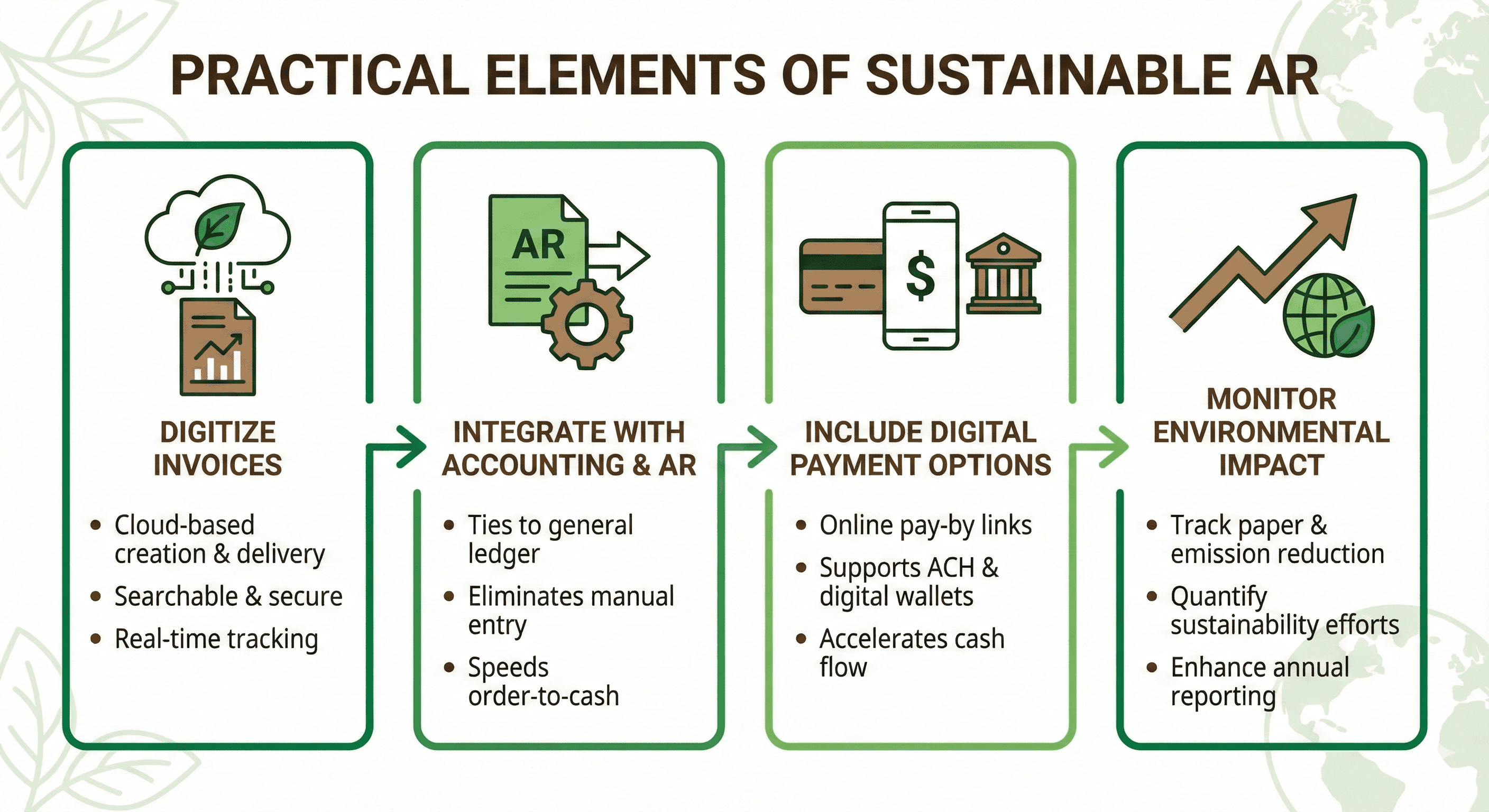
Here’s how you can make your AR process greener while improving efficiency:
Digitize Invoices From Creation to Delivery
Use cloud-based AR tools to generate and send invoices electronically. These invoices are searchable, secure, and trackable in real time.
Integrate With Accounting and AR Automation
When your invoicing is tied directly to systems like your general ledger and AR automation workflows, you eliminate manual touchpoints and speed up the entire order-to-cash cycle.
Include Digital Payment Options
Combine green invoicing with online pay-by links (credit card, ACH, digital wallets) to make it easier for customers to pay right away. Quick payment reduces the need for follow-ups and accelerates cash flow.
Monitor Environmental Impact
Some sustainability-driven organizations track and report their reduction in paper usage, carbon emissions, or resource consumption as part of annual reporting. This can help quantify the business case for green AR.
How AR Automation Tools Support Green Invoicing
Green invoicing is more effective when combined with technology that automates your AR workflow. Platforms like Abivo (abivo.ai) bring paperless billing, automated reminders, and integrated payment tracking into a single solution. Abivo lets you create digital invoices and send them automatically while keeping your accounting systems in sync.
By eliminating manual steps and enabling digital delivery, automated AR solutions help reduce environmental impact, lower operating costs, and improve customer experience. They also provide visibility into your receivables so you can act quickly when payments are delayed, all without paper handling.
Integrating green invoicing with AR automation modernizes your process and signals to customers that your business values sustainability alongside efficiency.
Key Takeaways
Green invoicing dramatically reduces paper waste and contributes to lower carbon emissions compared to traditional invoicing.
Digital billing improves operational efficiency, accuracy, and cash flow by automating manual tasks.
Sustainable AR aligns with corporate ESG and CSR goals, strengthening your brand.
Combining paperless invoices with online payment options accelerates payment cycles and reduces DSO.
AR automation platforms like Abivo help make your billing process both greener and more effective.