Invoicing Mistakes That Slow Down Payments (And How To Fix Them)
Many “late payments” start with avoidable invoice mistakes. This guide breaks down the most common errors service based businesses make, how they drag out DSO, and how better process and automation keep cash moving.

Soham Gawde
Business Analyst

Table of contents
Share
Late payments are often framed as a customer problem. In reality, many start much closer to home.
One widely cited set of invoicing statistics notes that 39% of invoices sent in the United States are paid late and that 61% of late payments are linked to incorrect or incomplete invoices. Separate accounts receivable research finds that administrative errors and late delivery of invoices are responsible for a large share of payment delays, even when customers have the funds available.
For service based SMBs, where revenue is almost entirely invoice driven and working capital is tight, this is not a detail. Invoicing quality directly controls how quickly cash comes back in.
This guide walks through seven invoicing mistakes that slow down payments, what they cost, and how to fix them. It also looks at how A/R automation from platforms like Abivo helps service based businesses prevent these issues at scale.
The Invoicing Error Problem: Why Late Payments Often Start With You
When a customer pays late, it is easy to point to their process, their priorities, or their cash flow. Yet A/R teams consistently report that a high percentage of disputes and delayed approvals are rooted in three simple issues:
The invoice is wrong.
The invoice is unclear.
The invoice did not arrive in time to be processed.
AP benchmarks show that top performing finance teams achieve over 97 percent “first time right” invoice accuracy, while error rates above 5 percent are a red flag. On the receivables side, small business late payment studies highlight that many firms are sitting on tens of thousands of dollars in unpaid invoices at any given time, with late payments creating persistent cash flow strain.
The upside is that invoice quality is fully under your control. Fixing these mistakes improves cash flow without touching pricing, headcount, or your service model.
Mistake 1: Incorrect Amounts And Calculation Errors

Nothing slows payment faster than a wrong total. Common issues include:
Miskeyed hours, rates, or material quantities
Incorrect tax calculation or rounding
Discounts applied twice or not at all
When customers spot math errors on an invoice, they usually stop the process, ask for clarification, and wait for a corrected version. That can easily add one or two weeks to your DSO.
How to fix it
Use invoicing or accounting tools that calculate line totals, taxes, and discounts automatically.
Integrate time tracking and job costing so billable hours and rates flow directly into invoices instead of being retyped.
For higher value invoices, add a quick second person check against the contract, quote, or work order.
The goal is to remove manual calculation wherever you can so your team cannot accidentally introduce errors.
Mistake 2: Missing Or Vague Payment Terms

Many invoices bury terms in fine print or rely on shorthand such as “Net 30” with no due date or clear instructions. That looks simple, but it creates friction for accounts payable teams that have to decide when and how to schedule payment.
Late payment guides consistently highlight unclear terms as a key driver of delays, because buyers are unsure what “on time” actually means.
Typical problems:
No explicit due date shown on the invoice
“Due upon receipt” language that corporate AP teams interpret loosely
No visible reference to accepted payment methods or bank details
Late fee policies that are enforced but never clearly stated
How to fix it
Add a clear due date near the top of every invoice, for example: “Due on 15 March 2025.”
Align invoice wording with your contracts so terms mean the same thing everywhere.
List accepted payment methods and include payment links where possible.
Summarize your late fee or interest policy in plain language in contracts and repeat a short version in the invoice footer.
Clear expectations make it easier for customers to pay you on time without extra back and forth.
Mistake 3: Sending Invoices To The Wrong Person Or System
Our guide to keeping the right AP contact on every account covers how to fix contact records before they cost you a payment cycle.
In many organizations, invoices must go to a specific email, portal, or AP system. If you send them somewhere else, they are not rejected, they just sit.
Studies on invoice accuracy and routing show that outdated customer records, generic inboxes, and misdirected invoices are a recurring cause of payment delays, especially when a buyer requires portal submission or purchase order matching.
How to fix it
Maintain a simple customer master profile with billing contact, backup contact, billing address, and preferred delivery method.
Capture portal requirements during onboarding and keep them visible in your CRM or job system.
Confirm the first invoice for any new customer or large account: check that it was received, opened, and routed to AP.
Update records whenever contacts change, not just when a problem occurs.
Routing is not glamorous work, but once it is set up properly, invoices stop disappearing into the wrong inbox.
Mistake 4: Late Or Inconsistent Invoice Submission

If you invoice days or weeks after work is completed, you give customers a head start on delay. For recurring services, inconsistent timing makes it impossible for them to automate payment runs.
Field service and contractor content repeatedly flags slow or irregular invoicing as a major, and fully avoidable, cause of late payment.
How to fix it
Set a standard: invoice within 24 to 48 hours of job completion or milestone sign off.
For retainers and recurring services, lock in a fixed billing date each month and stick to it.
Use your field, clinic, or project tools to trigger draft invoices automatically when work is closed.
Align your internal approval process so supervisors approve billable work quickly instead of holding up billing.
When customers see your invoices at the same time each cycle, it becomes easier for them to include you in their routine payment runs.
Mistake 5: Vague Or Non Itemized Descriptions
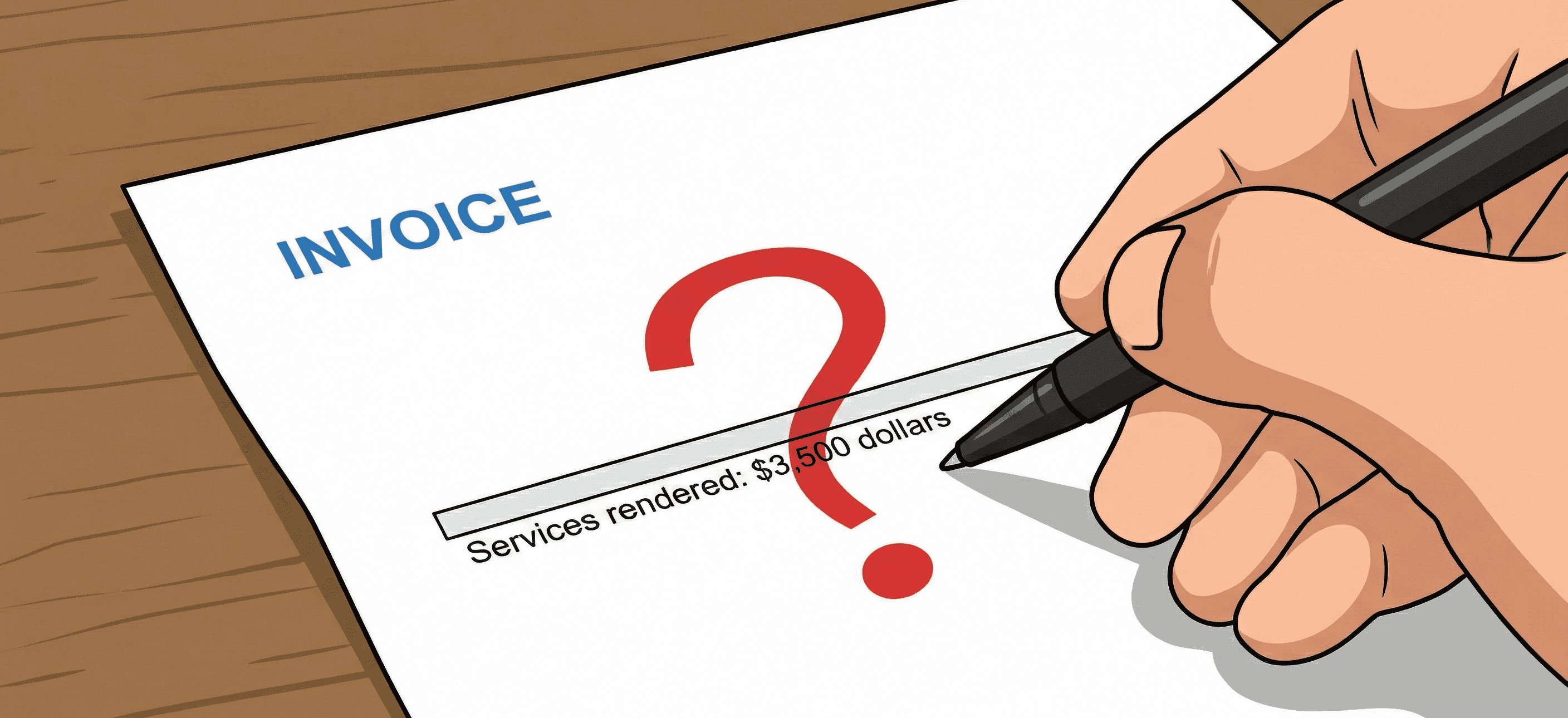
A single line that reads “Services rendered: 3,500 dollars” forces the customer’s finance team to guess what they are approving. That slows down approval and invites disputes.
Guides on common invoice disputes point to unclear descriptions and lack of itemization as a frequent trigger, especially when approvers were not directly involved in the work.
How to fix it
Mirror your proposals and statements of work in your line items.
Separate labor, materials, equipment, and third party costs with quantities and unit prices where they apply.
Include service dates, locations, or project phases so approvers can match invoices to work delivered.
For time based work, include a simple summary of hours and roles.
You do not need an essay on every line. You do need enough clarity that a new finance approver can see what they are paying for without chasing your team for an explanation.
Mistake 6: Tax And Compliance Errors

Incorrect sales tax, missing VAT details, or absent registration numbers can cause invoices to be rejected outright by a customer’s AP system. This is especially common for service businesses working across multiple states or countries.
Resources on invoice compliance and tax handling highlight misapplied tax as a common reason invoices are diverted into exception queues rather than being paid in the standard run.
How to fix it
Use invoicing or accounting software that calculates tax based on customer location and service type.
Store tax IDs and standard legal text inside your templates so they appear on every invoice.
For multi jurisdiction work, validate tax rules with a qualified advisor and test sample scenarios before going live.
Avoid copying templates between regions without reviewing the tax setup.
Getting this right protects both your business and your customer from compliance risk and keeps invoices moving.
Mistake 7: Weak Follow Up And Tracking After The Invoice
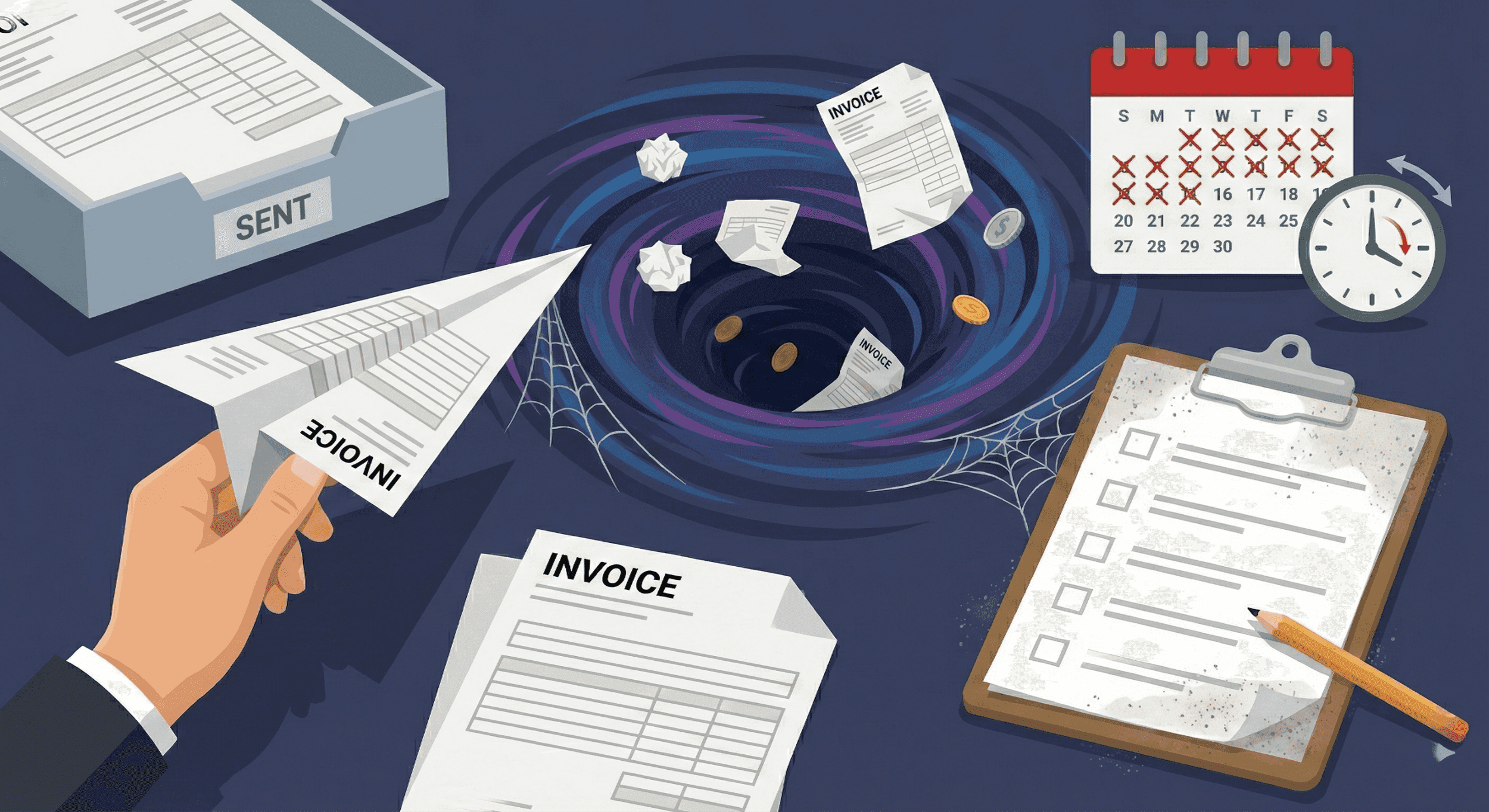
Even a perfect invoice can be paid late if no one tracks its status. Many teams rely on spreadsheets or memory, which means some invoices never receive a reminder until they are significantly overdue.
Invoice management research shows that manual tracking consumes substantial time and that poor visibility into invoice status is a key reason cash flow feels unpredictable.
How to fix it
Use an AR dashboard or invoicing system that shows open, due soon, and overdue invoices at a glance.
Set a simple reminder cadence: for example, one reminder before the due date, one on the due date, and structured follow ups at 7, 14, and 30 days past due.
Standardize reminder templates that stay professional and consistent with your credit policy.
Track disputes and promises to pay in one place so anyone on your team can see the full history.
Structure turns collections from occasional firefighting into a predictable process.
Why Service Based SMBs Feel These Mistakes First
Contractors, home services, clinics, and professional services firms live in a world of high invoice volume, project specific pricing, and thin working capital buffers. A few patterns make invoicing mistakes more painful in these businesses:
Revenue depends almost entirely on invoicing, not instant card payments.
Work is complex and often intangible, which increases the risk of misunderstandings.
Upfront costs for labor and materials are real, so every week of delay bites into the ability to fund the next job.
In many cases, the last thing a client experiences in your delivery journey is the invoice. If that document is confusing or incorrect, it can overshadow the quality of the work and reduce the chance of repeat business or referrals.
How Abivo Helps Turn Invoices Into Faster Cash
Abivo is designed specifically for service based SMBs that run on invoices. It connects to systems you already use, such as QuickBooks, NetSuite, Xero, FreshBooks, Sage, Microsoft Dynamics, Stripe, Square Invoices, SAP Business One, Jobber, ServiceTitan, BuildOps, and Bill.com.
With that data in place, Abivo can:
Use AI agents to call and email customers with context aware reminders that reference specific invoices and terms.
Adjust outreach based on each customer’s payment behaviour so reliable payers receive gentle nudges and chronic late payers receive firmer follow up.
Give you a live view of open invoices, expected payment dates, and at risk accounts so you can plan cash more confidently.
The result is a receivables process that is accurate at the front end and consistent at the back end, without adding manual workload to your team.
Practical Fixes You Can Roll Out This Month
To turn this into action, you can start with a focused set of changes:
Standardize your template
Include a clear due date, itemized lines, tax details, payment instructions, and your contact information.Clean your customer data
Build or update a simple master list of billing contacts, delivery methods, and portal requirements.Tighten your timing
Commit to a 24 to 48 hour window for project based invoices and a fixed monthly date for recurring billing.Automate math and tax
Move away from manual spreadsheets toward invoicing tools that handle calculation and tax rules for you.Structure your follow up
Define a reminder cadence and use an AR platform, such as Abivo, to execute it consistently across your entire invoice portfolio.
Even a modest reduction in error rate and DSO can release meaningful working capital back into your business.
Fix The Invoice, Then Fix The Cash Flow

Invoicing mistakes is not an unavoidable cost of doing business. They are patterns you can find and redesign.
When invoices are accurate, clear, delivered to the right place, and tracked through a structured collections process, most customers pay without drama. Combining those fundamentals with automation from a platform like Abivo turns receivables from a constant struggle into a manageable, data driven function.
For service based SMBs, that shift shows up in fewer disputes, more predictable cash inflows, and more time for your team to focus on work that grows the business instead of chasing the money you have already earned.