
AI Collections vs Collection Agencies: What's the Difference?
AI collections vs a collection agency: one automates friendly follow-up at 86% scale, the other takes a cut to chase debt. How to choose, by stage of delinquency.

Soham Gawde
Business Analyst

Table of contents
Share
AI collections and a collection agency solve different stages of the same problem. AI collections software automates friendly, proactive follow-up across calls, texts, and emails on your whole ledger, so invoices are less likely to go late in the first place. A collection agency steps in only after an account is seriously delinquent and takes a cut of what it recovers, often 15 to 30 percent or more. Abivo’s AI handles about 86% of that follow-up autonomously and escalates the 14% that needs a human.
Polite Persistence or Pressure? The Modern AR Dilemma
Every founder or CFO knows the pain of past-due invoices. Delinquencies squeeze cash flow, distract your team, and make growth forecasts feel like guesswork. The scale of the problem keeps growing: 43% of US B2B invoiced sales were overdue in 2025, according to Atradius. But in 2026, are you better served by the “polite persistence” of AI collections, or the old-school tactics of traditional collection agencies?
The practical gap is coverage and timing: Credit Pulse’s benchmark analysis finds businesses using automated payment reminders collect 12 to 18 days faster than those relying on manual follow-up. This transformation changes not just how you collect, but how you’re perceived by clients. Let’s explore how the AI-driven approach is reshaping AR for service-based businesses.
What Are AI-Powered Collections and How Do They Differ from Collection Agencies?
AI-Powered Collections Defined: Automation, Analytics, and Empathy
AI-powered collections platforms, like Abivo, leverage artificial intelligence, machine learning, and automation to personalize every step of accounts receivable. These systems don’t just send reminders; they analyze payment histories, customer sentiment, and preferred channels to deliver targeted, “friendly AR” nudges across email, SMS, phone, and self-service portals. Imagine a platform that texts a polite, timely reminder at just the right moment, then adapts if a client replies with a dispute or partial payment.
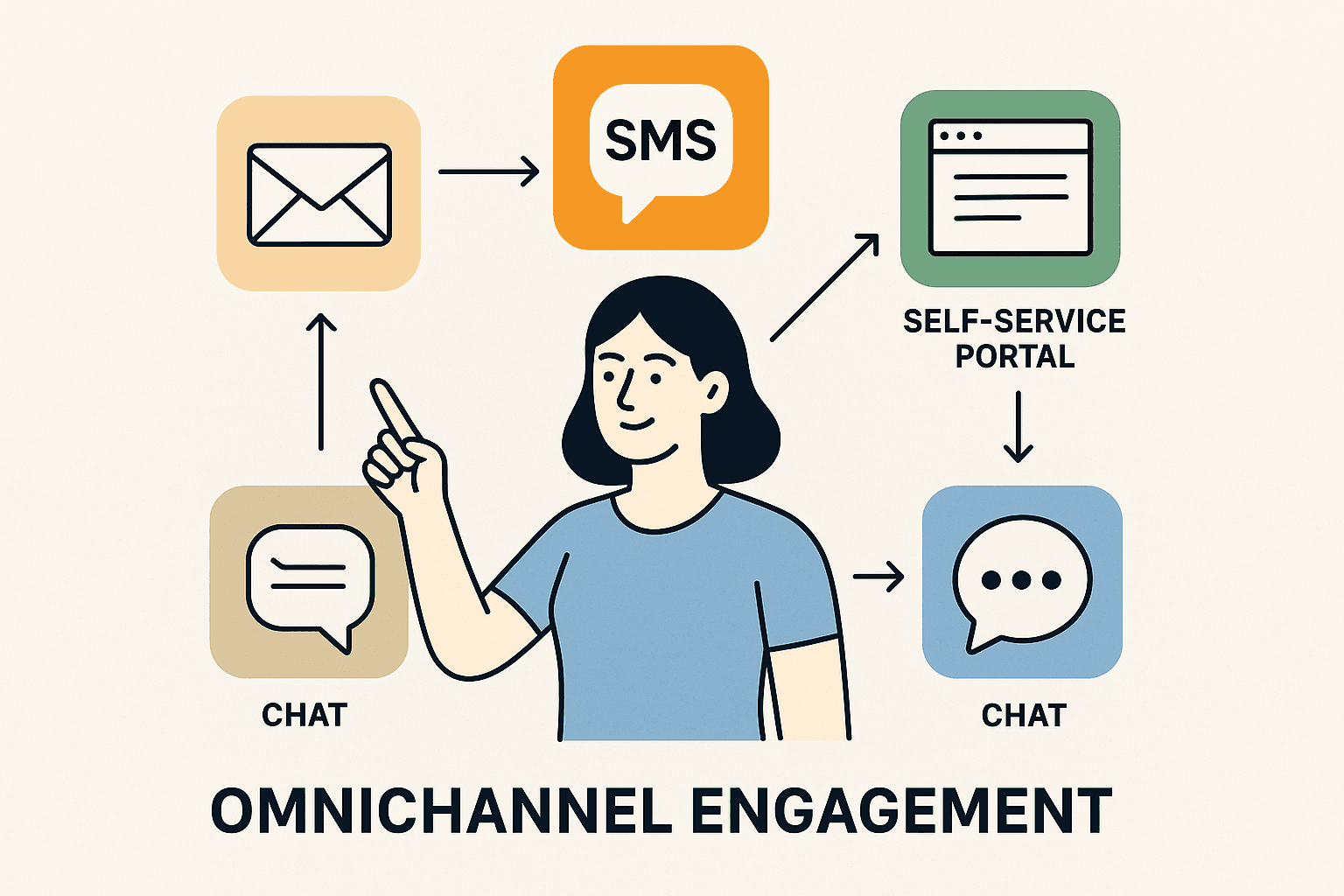
Benefits of AI collections include:
Omnichannel engagement: Reach customers via email, SMS, chat, and self-serve portals.
Personalization at scale: Machine learning tailors reminders and payment plans for each customer, maximizing engagement and resolution rates.
Full auditability: every interaction is logged with a complete record of who was contacted, when, and how they responded.
24/7 availability: AI bots respond instantly to questions or payment uploads, even after hours.
The result is lower cost per contact, better cash forecasting, and customer relationships that survive the reminder, all with a polite, professional tone.
Traditional Collection Agencies: Outsourced, Human, and Often Aggressive
Traditional collection agencies are third-party firms contracted to recover overdue debts. They typically rely on teams of agents making daily phone calls, sending letters, and escalating cases as needed, often operating on a contingency basis (taking a percentage of collected amounts).
Key features include human agent outreach through repeated phone calls, mailed letters, and sometimes in-person contact. Aggressive tactics such as frequent calls, and negative credit reporting are common. Manual processes applied inconsistently across agents lead to complaints and damaged customer relationships. For many businesses, traditional agencies are a “last resort” for debts over 90 days past due, or for high-value receivables requiring escalation.
Beyond the Stereotypes: Strategy Comparison
Feature | AI-Powered Platform | Traditional Agency |
|---|---|---|
Coverage | Every account, every day | Prioritized subsets of placed accounts |
When it works | Early to mid delinquency, before relationships sour | Late-stage, seriously delinquent debt |
Customer Experience | Personalized, respectful, 24/7 | Often stressful, may damage relationships |
Operational Cost | Lower, fixed/subscription/usage | Contingent fee (15–30%) |
Scalability | Infinite, no limit on accounts | Headcount-bound, agent bottleneck |
Audit trail | Automated, complete, real-time | Manual notes, periodic reviews |
Omnichannel | Email, SMS, phone, chat, portal, self-serve | Phone, mail, sometimes SMS |
Best Use Case | Friendly AR, early-to-mid delinquency, large volume | High-touch, late-stage escalation, legal risk cases |
AI platforms excel at “polite persistence,” offering non-intrusive touchpoints that remind, not harass, and put self-service options first. Traditional agencies often rely on pressure, including frequent calls and legal threats. AI delivers unmatched scalability and consistency, processing tens of thousands of accounts simultaneously, while automated logging keeps every touchpoint consistent and reviewable, which manual agency workflows cannot match.
The Value Proposition of Polite Persistence: Why “Friendly” AR Wins
Personalization Over Pressure
At the core of AI-driven AR collections is personalized, “polite persistence.” AI anticipates when and how customers want to be contacted: if a client historically pays three days late, reminders are timed accordingly; if email is preferred over calls, the system adapts.
Compared to one-size-fits-all agency scripts, AI-driven messages achieve higher engagement, fewer complaints, and preserve long-term business relationships.
Consistency and Trust
AI-powered AR automation applies consistent guardrails to message timing, content, and frequency, so every customer gets the same professional experience. Every interaction is logged, auditable, and easy to review. Transparency, clear CTAs, and self-service links build trust and encourage timely resolution.
Aggressive Tactics and Customer Harm: The Risks of Traditional Agencies
Some agency methods remain aggressive: repeated daily calls outside preferred hours, threatening language, public debt discussions, and excessive messaging. Customers on the receiving end describe the experience as stressful, and the damage lands on the brand that hired the agency, since the customer rarely separates the two.
AI Collections: Technology and Tactics Explained
Machine Learning and Personalization
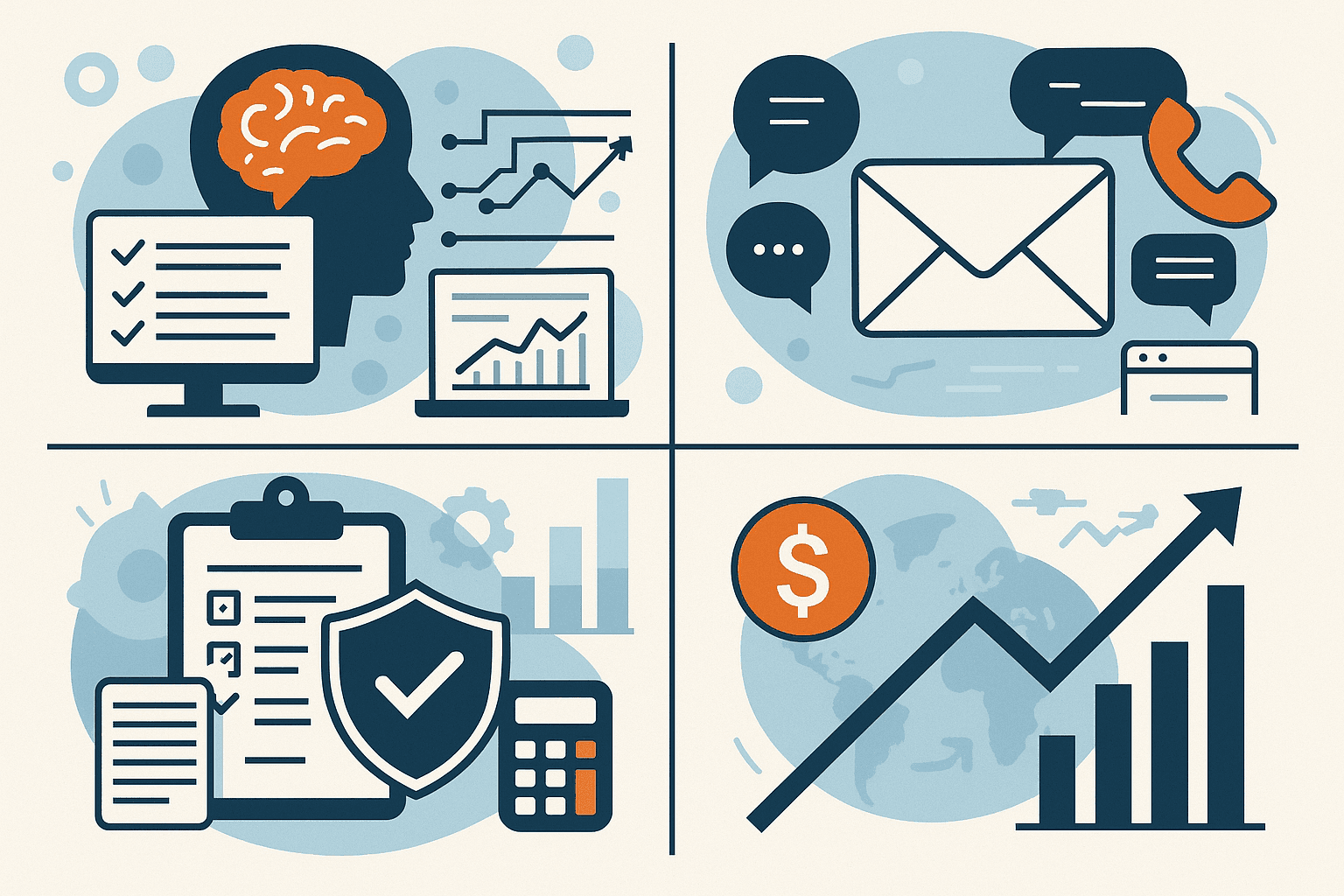
AI platforms analyze payment behaviors, predict likelihood of payment, classify risk tiers, dynamically generate reminder cadences, and adapt in real-time. With each interaction, AI improves its approach, boosting recovery while reducing customer frustration.
Omnichannel Engagement
AI delivers reminders across email, SMS, phone, chat, and portals, following client preferences. Following each customer’s preferred channel means fewer ignored reminders and faster resolution.
Preference and Opt-Out Handling
Platforms like Abivo handle opt-outs, honor contact preferences, verify consent to contact, and keep a full log of every message and call. Customers stay in control of how they are reached, and disputes get resolved from the record instead of from memory.
Cost-Benefit Analysis: AI vs Agencies
Agencies charge 15–30% of collected amounts, eroding margins. AI collections typically use subscription or usage-based pricing, a fraction of agency fees. The payback shows up as faster cash receipts, fewer disputes, and preserved client relationships. AI costs per account decrease with scale, unlike agencies.
Best Practices for Implementing AI Collections
Identify AR bottlenecks, high-DSO customers, chronic late-payers.
Pilot AI collections on problematic segments; compare 60–90 day results.
Clean AR data for optimal AI performance.
Customize reminders for tone, cadence, and channels.
Track KPIs: DSO, recovery rate, engagement, customer feedback.
Optimize continuously with AI insights.
Train staff to use AI as a co-pilot for exceptions.
Use AI audit logs to review conversations later.
Maximize omnichannel engagement: email, text, portal, chat.
Integrate AI with CRM, ERP, and finance systems
Practical Takeaways
AI collections provide higher engagement, recovery, and customer satisfaction at lower cost.
Polite persistence outperforms aggressive agent calls.
Every automated touchpoint is logged, so any conversation can be reviewed later.
Switching to AI protects clients, future-proofs operations, and enables scale.
Omnichannel and ML personalization improve speed, friendliness, and effectiveness.
Abivo - Polite Persistence with a Personal Touch
Service-based businesses using spreadsheets or agency calls risk lost revenue and relationships. Abivo enables AI-powered polite persistence: customized schedules, goal-oriented follow-up, and integration-ready automation. Call, text, and email intelligently, scaling as your portfolio grows, resolving disputes faster, and preserving customer trust. This is the 86/14 model in practice: Abivo’s AI handles about 86% of routine follow-up and routes the 14% that needs judgment to your team, which is why overdue invoices are better understood as a follow-up problem, not a collections problem.
The AR Future Is Polite, Persistent, and Powered by AI
The old stigma of collections, endless calls, threats, and attrition, is behind us. With AI, you collect confidently, build lasting client relationships, and unlock growth without added headcount. Digital transformation makes intelligent, respectful, and scalable AR automation a strategic leap toward financial health and loyalty. Ready to put polite, persistent follow-up to work? Get Started with Abivo.
Frequently Asked Questions
Is AI collections a replacement for a collection agency?
Mostly for prevention and early-stage follow-up. AI keeps invoices from aging into agency territory; an agency is still an option for accounts that are already badly delinquent.
How much does a collection agency charge?
Commonly 15 to 30 percent of what it recovers, and more for older or smaller debts. AI collections runs on a predictable cost with no per-dollar cut.
Will AI calling my customers hurt the relationship?
It is the top concern we hear, and after launch it consistently does not: the follow-up is polite and branded, and the AI escalates to a human the moment an account pushes back.
Can AI collections handle high-value accounts?
Yes. It runs proactive follow-up on every invoice and escalates disputes and sensitive negotiations to your team with full context.
When should I escalate an invoice instead of automating it?
When an account disputes the work, goes silent past your threshold, or needs a payment-plan conversation. See our guide on when to escalate an invoice.