
Accounts Receivable Myths Debunked: 5 Misconceptions Hurting SMBs and How to Fix Them
Late payments aren’t just bad luck. This article breaks down five common accounts receivable myths that quietly slow cash flow for SMBs and explains what actually improves collections today.

Sia Ghazvinian
Co-Founder & CEO

Table of contents
Share
Late payments and cash flow challenges are familiar headaches for small and mid-sized service businesses. Many business owners assume that simply issuing invoices means customers will pay on time, or they believe only large enterprises benefit from automation, and these misconceptions can cost time, cash, and sanity. In reality, improving how you manage accounts receivable (AR) depends on dispelling these myths and adopting approaches that strengthen your workflows, communications, and results.
In this article you’ll find five persistent AR myths, the truth behind them, and practical steps you can start using today to improve your collections performance.
Myth 1
“Customers Who Owe Money Will Pay Eventually Without Follow-Up”

A common belief among SMB owners is that once the invoice is sent, it’s just a matter of time before payment arrives. This assumption lets overdue balances drag on, often far past your payment terms.
It’s more complicated than that. Surveys show that 54 percent of businesses receive payments late and many are past due for more than a month. Without reminders and structured follow-ups, customers forget, deprioritize your invoice, or simply assume you’ll chase it later.
Best practice is consistent outreach. Set a cadence of reminders starting before the due date and continuing after it. Studies and finance experts show that automated reminders significantly increase on-time payment rates by keeping invoices top-of-mind and reducing manual errors in follow-ups.
Reality Check: Don’t treat “eventual payment” as a strategy. Actively managing relationships and cash flow drives results.
Myth 2
“Accounts Receivable Automation Is Too Expensive for SMBs”
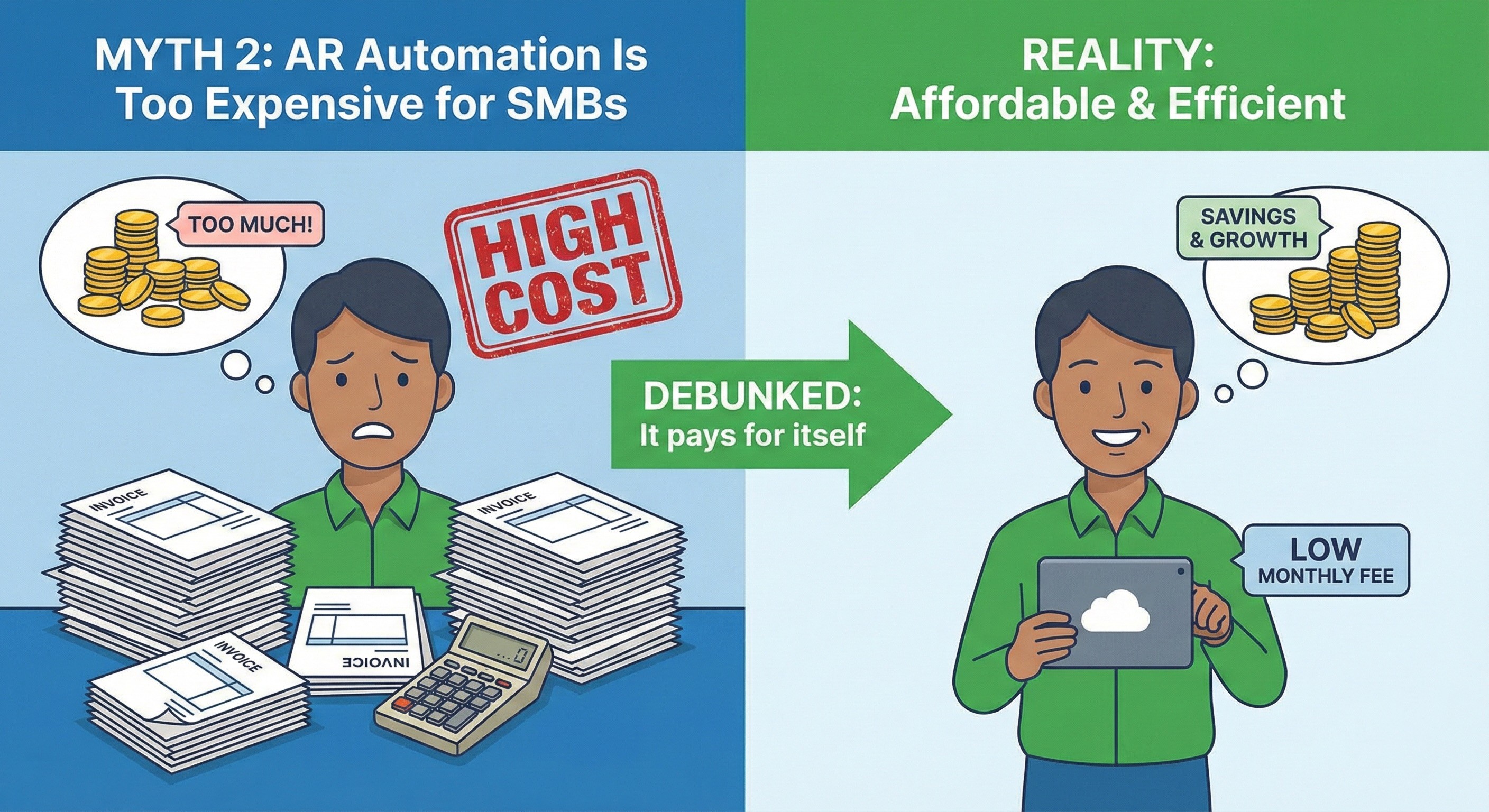
There’s a perception that AR automation is reserved for large companies with enterprise budgets and armies of finance staff. That’s not accurate today.
Modern automation tools are scalable for businesses that generate hundreds of invoices per month. Automation doesn’t just save time, it prevents errors, ensures invoices go out promptly, and improves reconciliation. For many SMBs, the cost of manual AR work, late payments, staff hours, data errors, and missed cash, far outweighs the subscription price of modern software.
Reality Check: Automation pays for itself when it reduces manual effort and accelerates collections.
Myth 3
“Manual AR Means You Have Control Over the Process”
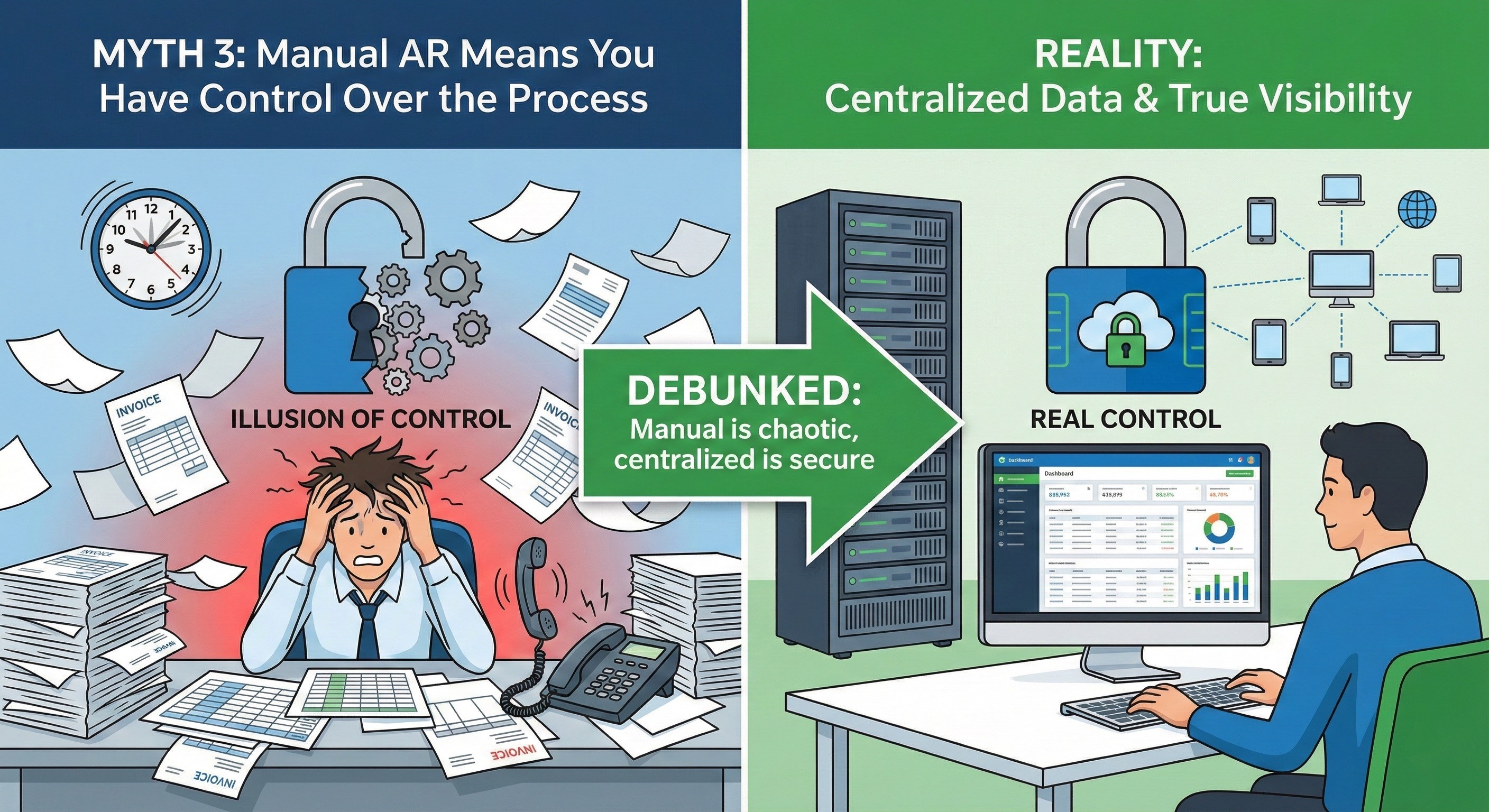
Some finance leaders equate manual processes, spreadsheets, separate inboxes, clipboards of reminders, with control. In truth, manual systems often hide real problems until they show up as overdue payments.
Manual AR leads to fragmented ledgers, missed follow-ups, incorrect invoicing, and poor visibility into outstanding balances, all of which damage cash flow.
Automation tools centralize your receivables, standardize communications, and give you real-time insights into payment trends. That gives you more control, not less, because you can see and act on collection priorities instead of guessing where attention is needed.
Reality Check: Automation enhances control by providing consistent, accurate AR data and engagement.
Myth 4
“Customers Don’t Mind If You Don’t Provide Modern Payment Options”
Some service businesses still rely on checks, manual bank deposits, or invoicing without digital pay links. Meanwhile, customers increasingly expect fast, flexible ways to pay.
Digital payment options such as ACH, credit card, online portals, and electronic invoices make it easier for customers to pay quickly. The easier a payment is to complete, the higher the likelihood it arrives on time.
Unnecessarily sticking to old processes increases friction for your customers and delays your cash flow.
Reality Check: Offering multiple, modern payment options reduces barriers to payment.
Myth 5
“AR Tools Replace Human Expertise”
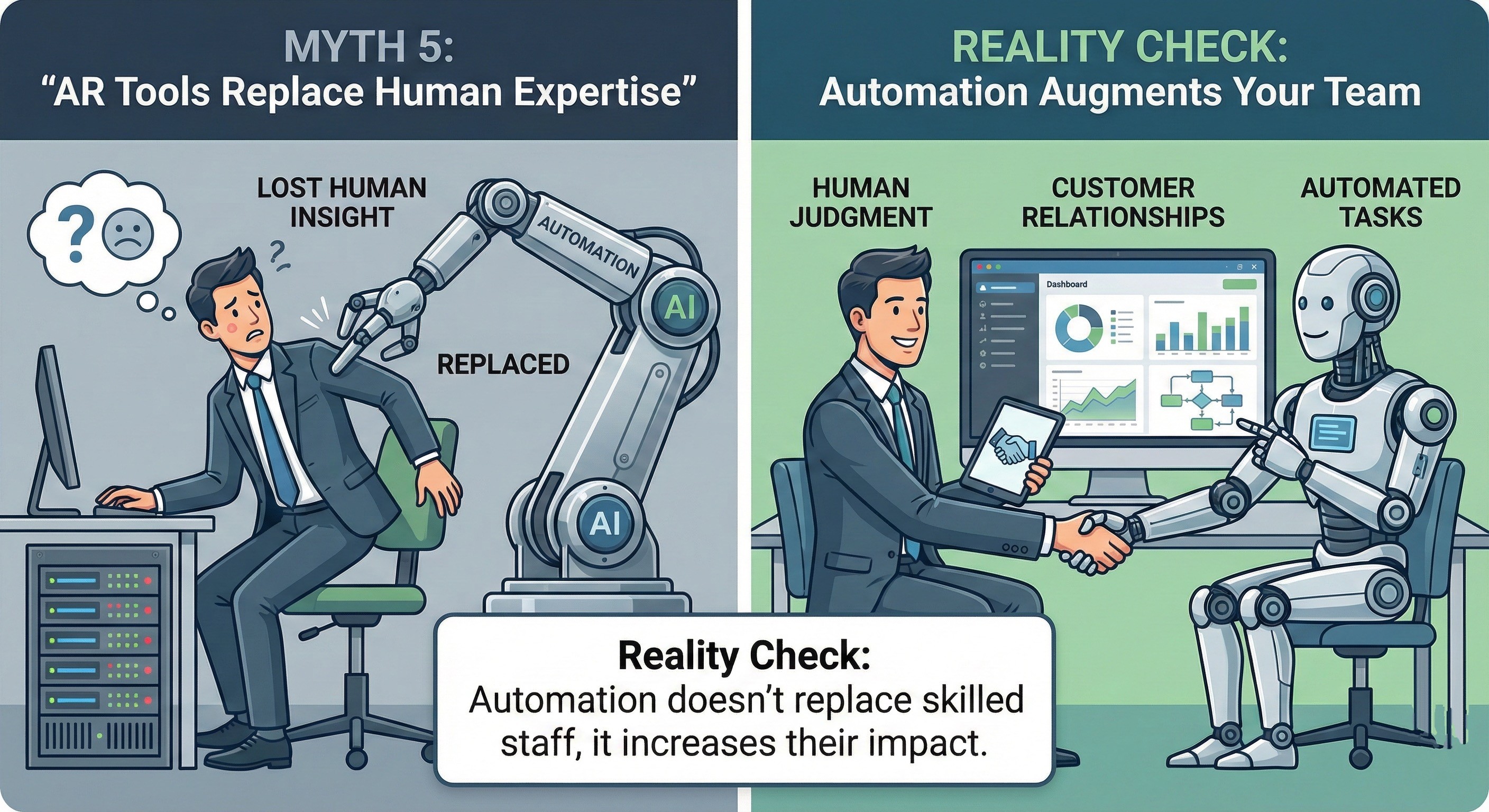
Another persistent belief is that if you adopt automation or AI for AR and collections, you lose the human insight that matters in challenging customer situations.
Good automation actually augments your team. It handles repetitive tasks like sending reminders and tracking outstanding balances, freeing your team to focus on higher-value work such as resolving disputes, negotiating payment plans, and strengthening customer relationships.
This human + machine approach improves outcomes. Human judgment matters most when interpreting customer needs and exceptions. Automation makes sure consistent, professional outreach happens at the right time, every time.
Reality Check: Automation doesn’t replace skilled staff, it increases their impact.
What These Myths Cost Your Business
Believing these misconceptions can translate into:
Higher days sales outstanding (DSO), meaning cash arrives later than it should.
More internal labor hours spent on repetitive tasks that could be automated.
Increased risk of invoice errors, disputes, and customer frustration.
Fragmented data and poor visibility into your financial health.
Addressing the myths above is not just education, it’s strategy. When you break these outdated assumptions, you start to see AR as a lever for predictable cash flow and stronger customer relationships.
Practical Takeaways
Send structured payment reminders regularly before and after the due date to reduce late payments.
Evaluate AR automation tools that integrate with your accounting system and digital payment methods.
Standardize your communications, terms, and data entry practices to prevent errors and disputes.
Offer multiple payment options to make it easier for customers to settle invoices promptly.
Use automation to streamline routine tasks, and let your team focus on customer engagement and problem resolution.
Abivo bring these ideas together by connecting your existing systems to AI-powered email and call agents that follow up professionally and consistently. Integrated with platforms such as QuickBooks, NetSuite, FreshBooks, Sage, Xero, Stripe, Square Invoices, and others, they help reduce manual work while improving your collections outcomes.
If you replace old assumptions with fact-based AR strategies, you’ll build healthier cash flow, lower DSO, and a more resilient finance operation. Think of it not as changing how you collect, but as upgrading how you succeed.


