
DeFi and Decentralized Payments: Could Blockchain Disrupt Accounts Receivable?
Blockchain and DeFi could transform accounts receivable with smart contracts, crypto payments, and faster settlement, but adoption remains limited.

Pratheek Adi
Co-Founder & CTO

Table of contents
Share
Blockchain and decentralized finance (DeFi) have already disrupted areas like payments, lending, and asset management. Now they’re beginning to raise a bigger question for finance teams: could decentralized payments change how accounts receivable works altogether?
While most businesses still rely on traditional invoicing, bank transfers, and card payments, emerging technologies like smart contracts, crypto payments, and decentralized settlement systems are challenging long-held assumptions about billing, collections, and cash flow management.
This article explores how DeFi and blockchain could impact AR in the future, what’s realistic today, and what finance leaders should be paying attention to.
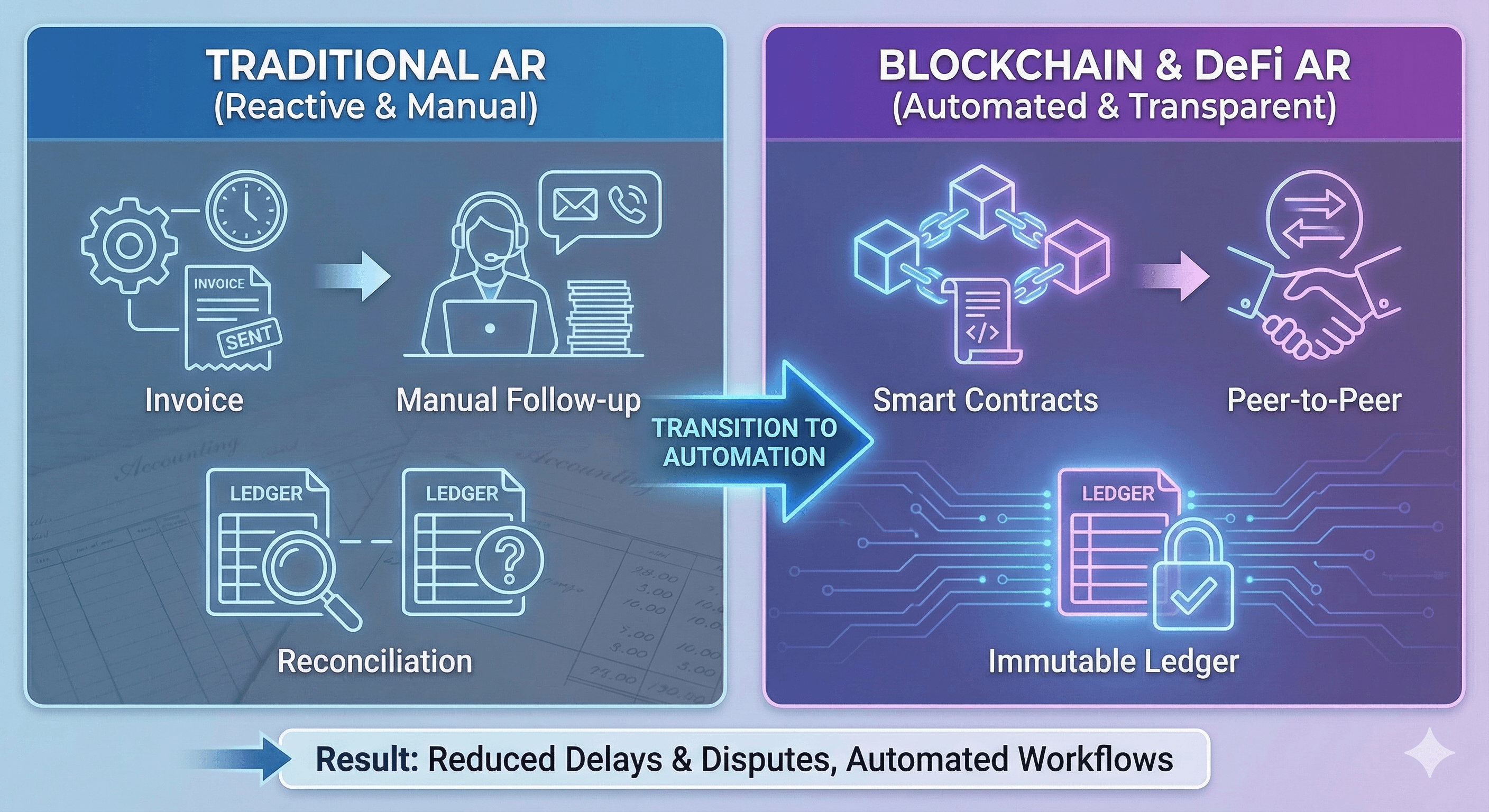
How Traditional AR Works Today
Before looking forward, it’s worth grounding this discussion in how AR typically functions today.
Most AR processes involve:
Issuing invoices after goods or services are delivered
Waiting for customers to pay via bank transfer, ACH, or card
Following up with reminders when payments are late
Reconciling payments back to invoices and the general ledger
Even with automation, AR is still largely reactive. Payment delays, disputes, and manual reconciliation remain common, especially in B2B environments. This friction is exactly what blockchain advocates believe decentralized systems can reduce.
What DeFi and Blockchain Bring to the Table
At a high level, blockchain introduces three ideas that are especially relevant to AR:
Programmable money through smart contracts
Peer-to-peer payments without traditional intermediaries
Transparent, immutable ledgers shared across parties
Together, these features create the possibility of AR workflows that execute automatically, reduce delays, and minimize disputes.
Smart Contract Invoicing: Automating Payment at the Source
One of the most discussed use cases is smart contract invoicing.
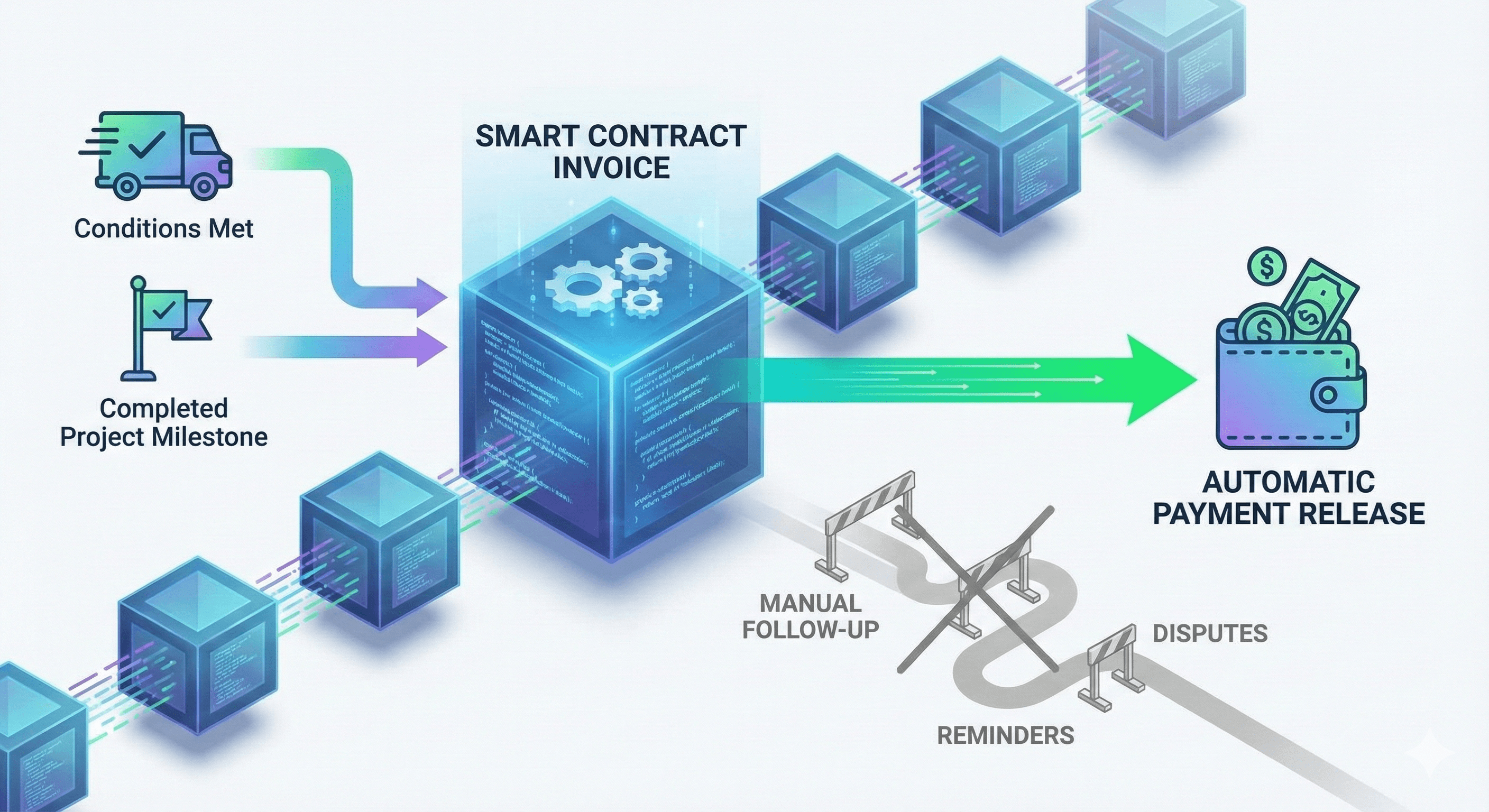
A smart contract is code deployed on a blockchain that executes automatically when predefined conditions are met. In an AR context, this could mean:
An invoice is embedded into a smart contract
Payment terms are encoded upfront
Once conditions are satisfied (delivery confirmation, milestone completion, usage threshold), payment triggers automatically
In theory, this eliminates manual follow-up entirely. There’s no waiting period, no reminder emails, and no collections cycle. The system enforces payment logic automatically.
For project-based or usage-based billing models, this could dramatically reduce disputes about whether work was completed or milestones were met. The contract itself becomes the source of truth.
That said, smart contracts rely on accurate inputs. If delivery confirmation or usage data is wrong, automation can create new disputes rather than eliminate them.
Crypto Payments and Faster Settlement
Another potential shift is crypto-based payments for invoices.
Traditional B2B payments can take days or even weeks to settle, especially across borders. Blockchain payments can settle in minutes, regardless of geography.
For AR teams, this could mean:
Faster cash availability
Reduced reliance on intermediary banks
Lower transaction fees for cross-border payments
Clear, timestamped payment records on-chain
Stablecoins, in particular, are gaining attention because they reduce price volatility while preserving the speed and programmability of blockchain payments.
However, adoption remains limited. Many customers are not comfortable paying invoices in crypto, and finance teams must still manage conversion, custody, and accounting treatment.
Decentralized Settlement and Reconciliation
Reconciliation is one of AR’s most time-consuming tasks. Payments arrive without references, partial amounts are sent, or multiple invoices are bundled together.
Blockchain-based systems could simplify this by:
Embedding invoice IDs directly into transactions
Creating shared, tamper-proof payment histories
Reducing ambiguity around when payment was sent and received
In a decentralized AR model, both buyer and seller reference the same ledger. This shared visibility could reduce disputes and shorten resolution cycles.
But this assumes both parties operate on compatible blockchain infrastructure, which is not yet common in most industries.
Could DeFi Eliminate Collections Altogether?
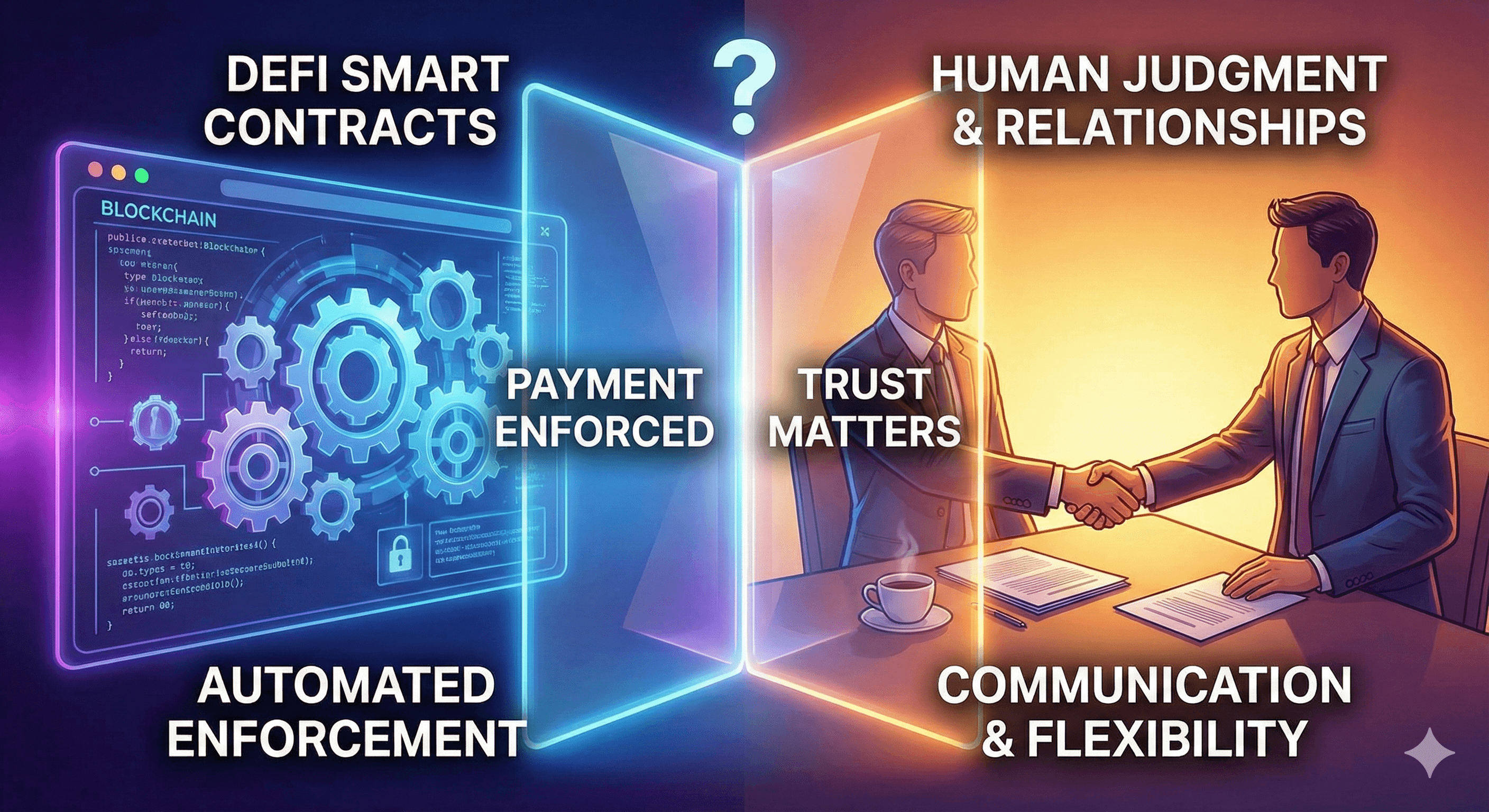
Some DeFi advocates argue that collections could eventually disappear.
The logic is simple: if payment is enforced automatically by smart contracts, there is no such thing as a late invoice.
In reality, most business relationships are more complex. Services change, customers negotiate, exceptions arise, and trust still matters. Fully rigid enforcement can harm customer relationships, especially in long-term B2B partnerships.
AR isn’t just about enforcing payment. It’s also about communication, flexibility, and preserving revenue while maintaining trust. Decentralized systems may reduce friction, but they won’t eliminate the need for human judgment.
The Real Barriers to Blockchain-Based AR
Despite the potential, several obstacles limit near-term adoption.
Regulatory Uncertainty
Crypto and DeFi regulations vary widely by country. Compliance, tax treatment, and reporting standards remain unclear in many jurisdictions.
Customer Readiness
Most customers are not prepared to pay invoices via crypto or interact with smart contracts, especially outside of tech-forward industries.
Accounting and Reporting Challenges
Reconciling on-chain transactions with traditional accounting systems is still complex. Revenue recognition, FX treatment, and audit requirements add friction.
Integration Gaps
Most ERP and AR systems are not built to natively support blockchain payments or smart contracts, creating operational silos.
What This Means for AR Teams Today
Blockchain is unlikely to replace traditional AR processes in the near future. But its ideas are already influencing how modern AR platforms evolve.
Many of the benefits promised by DeFi, automation, transparency, faster settlement—are being delivered today through AR automation software, without the regulatory and operational risks of decentralized finance.
Modern AR platforms already:
Automate invoice delivery and follow-ups
Apply rules-based logic to reminders and escalations
Integrate payments directly into invoices
Provide real-time visibility into receivables and risk
Tools like Abivo bring these capabilities into existing accounting and CRM systems, offering practical automation without requiring customers to adopt entirely new payment rails.
Preparing for the Future Without Betting the Business
Finance leaders don’t need to adopt DeFi today to prepare for it.
Practical steps include:
Standardizing billing data and invoice structures
Automating AR workflows wherever possible
Ensuring systems are flexible and integration-ready
Monitoring how customers prefer to pay
Staying informed on regulatory developments
If blockchain-based AR becomes viable at scale, companies with clean, automated processes will be best positioned to adopt it without disruption.
Key Takeaways
Blockchain introduces programmable payments, shared ledgers, and faster settlement that could reshape AR over time.
Smart contract invoicing could automate payment enforcement but depends heavily on accurate inputs and customer adoption.
Crypto and stablecoin payments may reduce settlement delays, especially for cross-border transactions.
Regulatory, operational, and customer readiness challenges limit near-term disruption.
Today’s AR automation tools already deliver many benefits promised by DeFi, without the risks.