
Do Late Payments Drive Customer Churn? The Hidden Connection and How Better Billing Improves Retention
Billing problems quietly shape how customers feel about your business. Learn why AR workflows influence retention and how smoother processes improve both cash flow and relationships.

Pratheek Adi
Co-Founder & CTO

Table of contents
Share
Late payments are usually thought of as a cash flow problem. They clog up working capital and stretch finance teams thin. But there’s another consequence that many small and mid-sized service businesses overlook: late or frustrating billing experiences can actually push customers away.
For SMBs that rely on long-term client relationships like trades, medical clinics, and professional services firms, the way you handle invoicing and payment follow-up isn’t just a finance concern. It’s part of the overall customer experience. When billing feels sloppy, confusing, or inconsistent, customers begin to question whether they want to keep working with you at all.
In this article you’ll learn why late payments and poor billing processes matter for customer loyalty, how smoother accounts receivable (AR) workflows strengthen relationships, and what practical steps you can take to keep customers satisfied while improving your cash flow.
Why Billing Experience Is Part of the Customer Journey
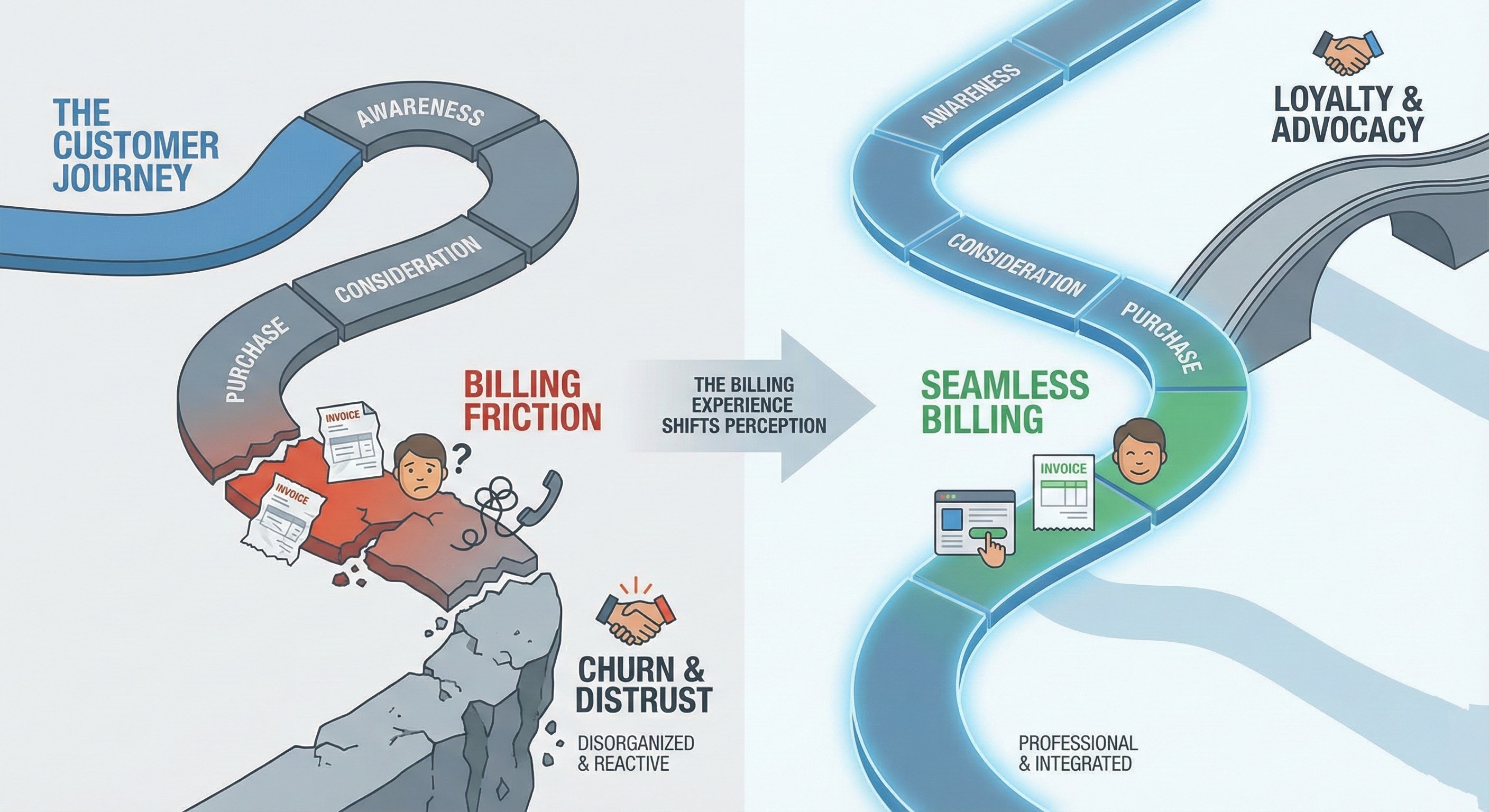
Customers don’t separate billing from the rest of their experience with your business. They remember every touchpoint, from the first consultation to the final invoice. If any part feels unprofessional or frustrating, it colors their perception of the whole relationship.
Late payments don’t just cost money. They often reveal underlying friction in how you communicate about money and expectations. When invoices arrive late, lack clear instructions, or lead to awkward follow-up conversations, customers can feel annoyed, confused, or unsure about future interactions.
Customer experience research consistently shows that friction in any part of a service can increase churn. Although most studies focus on product quality or support, billing is increasingly recognized as a critical moment of truth for clients.
The Bottom Line
Billing that feels clumsy or reactive can make your business look disorganized. That perception erodes trust and reduces the likelihood someone will stay with you long term.
How Late Payments Reflect Billing Friction
Not all late payments are intentional. Many come down to process problems:
Invoices that are hard to read or missing payment options make it harder for customers to pay on time.
Inconsistent follow-ups leave customers unsure when or how you expect payment.
Manual processes increase the chance of mistakes, adding extra calls or emails to fix them.
When clients have to chase information or navigate unclear instructions, late payment becomes a symptom of a deeper experience issue, not just a cash flow glitch.
Consider these real-world points:
A customer who received an unclear invoice might delay payment while sorting out details.
A second customer might assume you don’t value prompt payments, so they prioritize other vendors.
A third customer might simply feel frustrated and decide not to renew a service contract when the term comes up.
In each case, the issue isn’t the amount owed, it’s how the billing interaction felt.
Practical Insight
Late payments and billing friction often feed each other. If your invoices aren’t clear and your follow-up is inconsistent, customers are more likely to pay late and less likely to want a long-term relationship.
The Connection Between AR and Customer Loyalty
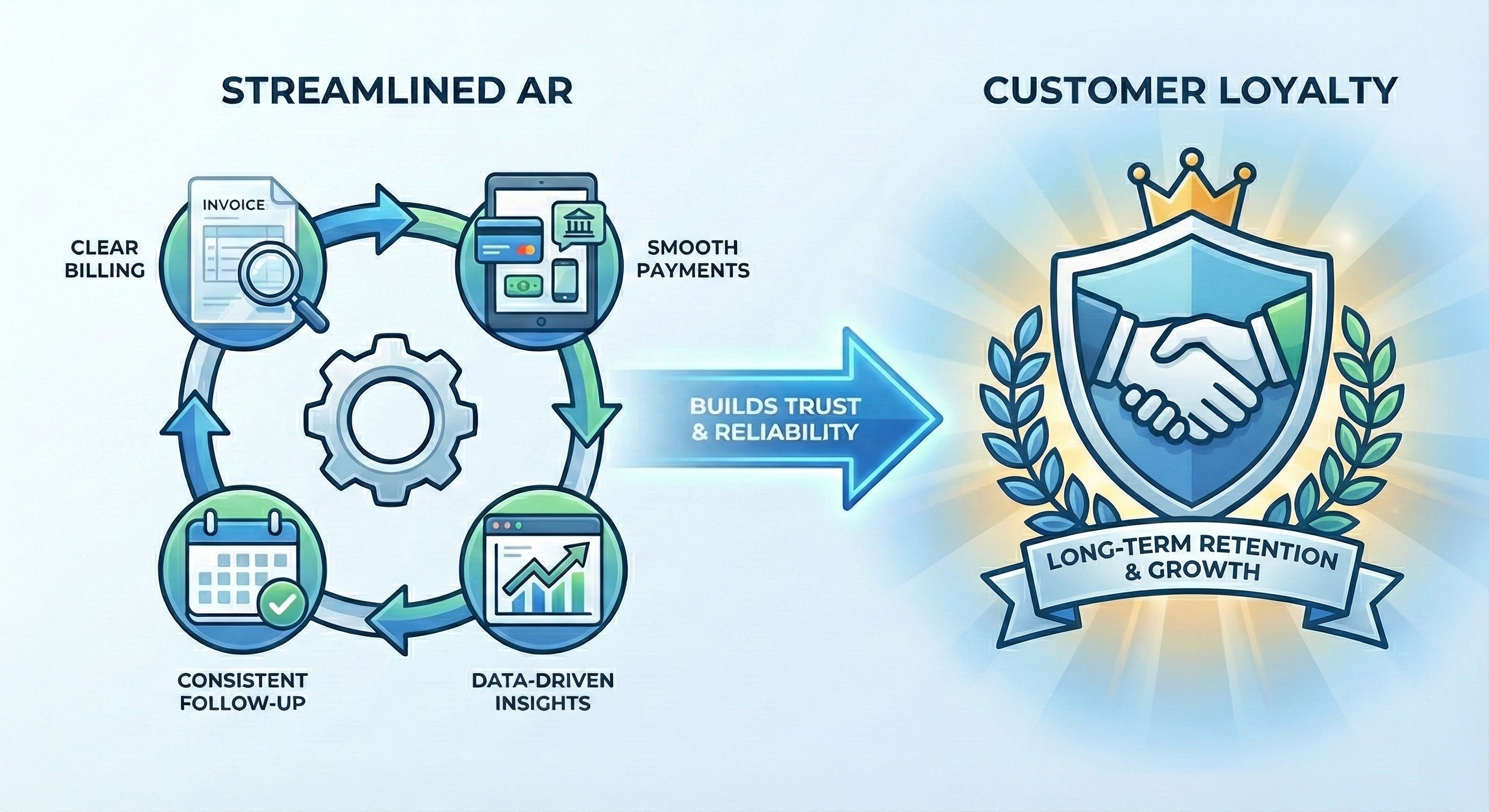
Customer loyalty is built on trust. When customers feel confident in your professionalism, they stay longer and refer others. Billing plays into that confidence.
Here’s how streamlined AR supports retention:
Clear, predictable billing shows professionalism
Customers want transparency. Accurate, timely invoices with explicit payment terms send a message that you run a reliable business.Smooth payment processes reduce friction
Offering modern payment options like online pay links, credit card, or ACH means clients can pay in the way they prefer, without hassle.Consistent follow-up prevents small issues from becoming relationship problems
Customers rarely react negatively to reminders sent thoughtfully and professionally. They react when follow-up is ad hoc, late, or emotional.Data-driven insights help you catch trends early
Real-time visibility into outstanding balances lets you see which accounts need attention before they sour.
Each of these contributes to a feeling of reliability. And reliability is a key reason customers stay with service providers.
Why Invoicing Problems Lead to Churn
When billing feels like a hassle, customers may conclude that working with you overall isn’t a smooth experience. That can lead to churn for three main reasons:
1. Customers Interpret Billing Friction as Operational Inefficiency
A client who receives an ambiguous invoice or has to wait for a corrected version may start wondering about your internal processes. They might worry that if billing is chaotic, the service work could be too.
For SMBs that live or die by reputation and repeat business, that perception matters.
2. Late or Disorganized Follow-Up Feels Unprofessional
Customers expect structured communication. When reminders are irregular or inconsistent, they seem like afterthoughts. That’s not just a finance message, it’s a brand message: you care more about your cash flow than their experience.
Repeat business depends on positive impressions at every stage.
3. Payment Barriers Create Negative Emotions
If customers struggle to pay because your invoice lacks clear pay-by links or modern options, they can feel irritated. Negative emotions do more to drive churn than neutral ones. People remember how processes made them feel, especially when money is involved.
How Better AR Improves Customer Experience and Reduces Churn
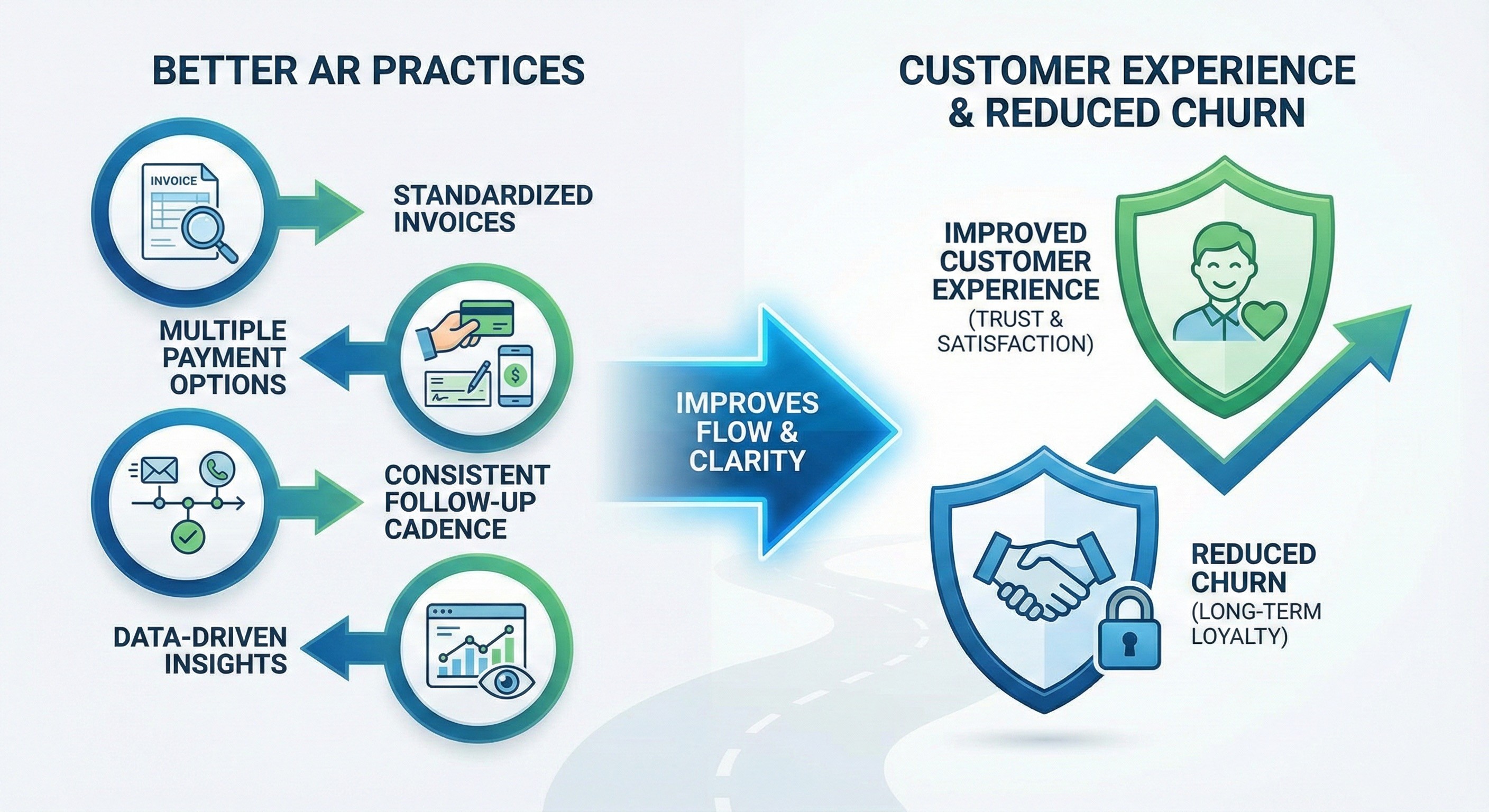
The good news is that improving your billing process, clarity, and follow-up cadence can have a measurable impact on both cash flow and loyalty.
Here are steps that help:
Standardize Invoice Communication
Make every invoice easy to read and complete with:
A clear description of services provided
Payment terms spelled out upfront
Due dates that match expectations discussed earlier
Contact information for billing questions
Clarity reduces confusion and delayed responses.
Offer Multiple Payment Options
Customers have different preferences. Some pay by card, others by ACH or bank transfer, and some still mail checks. Offering flexible options increases the chance they’ll pay on time.
A simple pay-by link on an email can cut days off your average payment time.
Create a Consistent Follow-Up Cadence
Don’t wait until an invoice is overdue to reach out. Develop a schedule of reminders that:
Starts before the due date
Continues with clear, factual messaging if payment is late
Offers help for any issues the customer might have
Consistency feels professional, not pushy.
Use Data to Identify Friction Points
Tracking trends in your AR data helps you spot issues early. For example:
Are certain services or customer segments paying late more often?
Are specific invoice formats confusing clients?
Do certain communication channels (email versus call) work better?
Data can guide improvements that keep both cash flow and satisfaction up.
What Automation Does for AR and Retention
Manual invoicing and chasing payments makes these steps harder to follow and scale. That’s where automation plays a crucial role.
Tools like Abivo (abivo.ai) help bring consistency and clarity to your AR workflows. Abivo integrates with systems like QuickBooks, NetSuite, FreshBooks, Sage, Microsoft Dynamics, Xero, Stripe, Square Invoices, SAP Business One, Jobber, ServiceTitan, BuildOps, and Bill.com, so your billing and payments stay in sync with your accounting data.
Automated reminders and AI-powered email and calling agents:
Ensure invoices are sent on time
Follow up consistently according to your rules
Provide clear, professional messaging every time
This reduces manual workload and prevents the kind of ad-hoc billing experience that irritates customers. When customers see a structured approach to billing, it reinforces the perception that you value their time and the relationship.
Automation doesn’t replace thoughtful human interaction. Instead it handles repetitive tasks so your team can focus on high-impact conversations with customers who need personal attention.
How to Start Reducing Churn Through Better Billing
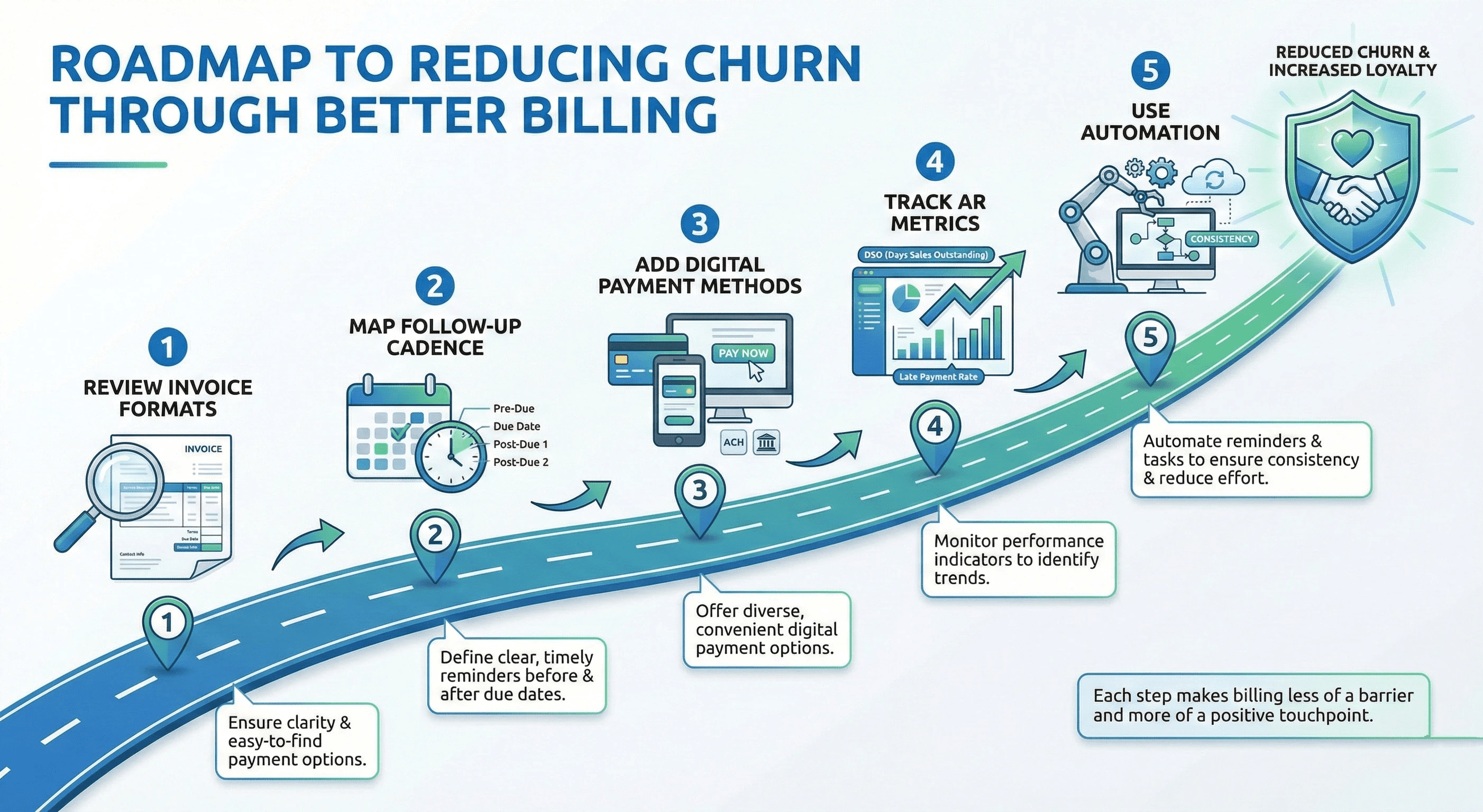
Improving customer loyalty through better AR doesn’t happen overnight. Here’s a simple road map:
Review your current invoice formats for clarity and payment options.
Map your follow-up cadence with clear reminders before and after due dates.
Add or expand digital payment methods to make paying easier.
Track AR performance metrics like days sales outstanding (DSO) and late payment frequency.
Use automation to enforce consistency and reduce manual effort.
Each step makes billing less of a barrier and more of a positive touchpoint.
Practical Takeaways
Treat billing as part of the customer experience, not just a finance task.
Clear, consistent invoice communication reduces confusion and late payments.
Offering modern, flexible payment options increases on-time payments.
Automated reminders keep follow-up professional and predictable.
Use AR data to identify and fix pain points before they affect relationships.
Smoother billing doesn’t just improve cash flow. It strengthens the trust and confidence customers have in your business. When customers feel respected and supported throughout invoicing and payment, they are more likely to stay, refer others, and contribute to long-term success.