
How Trade Service Businesses Can Ensure They Get Paid: Essential A/R Strategies for Plumbers, Electricians, and HVAC Contractors
Trade contractors face serious payment challenges, learn the invoicing, follow-up, and automation strategies that ensure you get paid for completed work.

Soham Gawde
Business Analyst

Table of contents
Share
For trade service contractors, completing the job is only half the battle. Getting paid for that work is where many plumbing, electrical, and HVAC businesses struggle most. In 2025, 82% of contractors now face payment delays exceeding 30 days, a dramatic increase from just 49% two years earlier. These delays create dangerous cash flow gaps that prevent businesses from covering payroll, ordering materials, and taking on new projects.
The problem is especially acute for skilled trades. Recent data shows that 88% of small businesses face regular cash flow disruptions, with 47% of trade contractors citing rising material costs as a barrier to profitability. When customers pay late or not at all, these businesses cannot absorb the hit. More troubling still, a 2025 survey found that 91% of construction industry respondents reported being paid late at least once, and 69% experienced not being paid at all for completed work.
The good news? Most payment problems can be prevented with better processes. This guide provides practical accounts receivable strategies specifically designed for home and commercial service contractors who want to protect their revenue, maintain healthy cash flow, and avoid the frustration of chasing down payments.
Start With Clear Payment Terms Before Work Begins
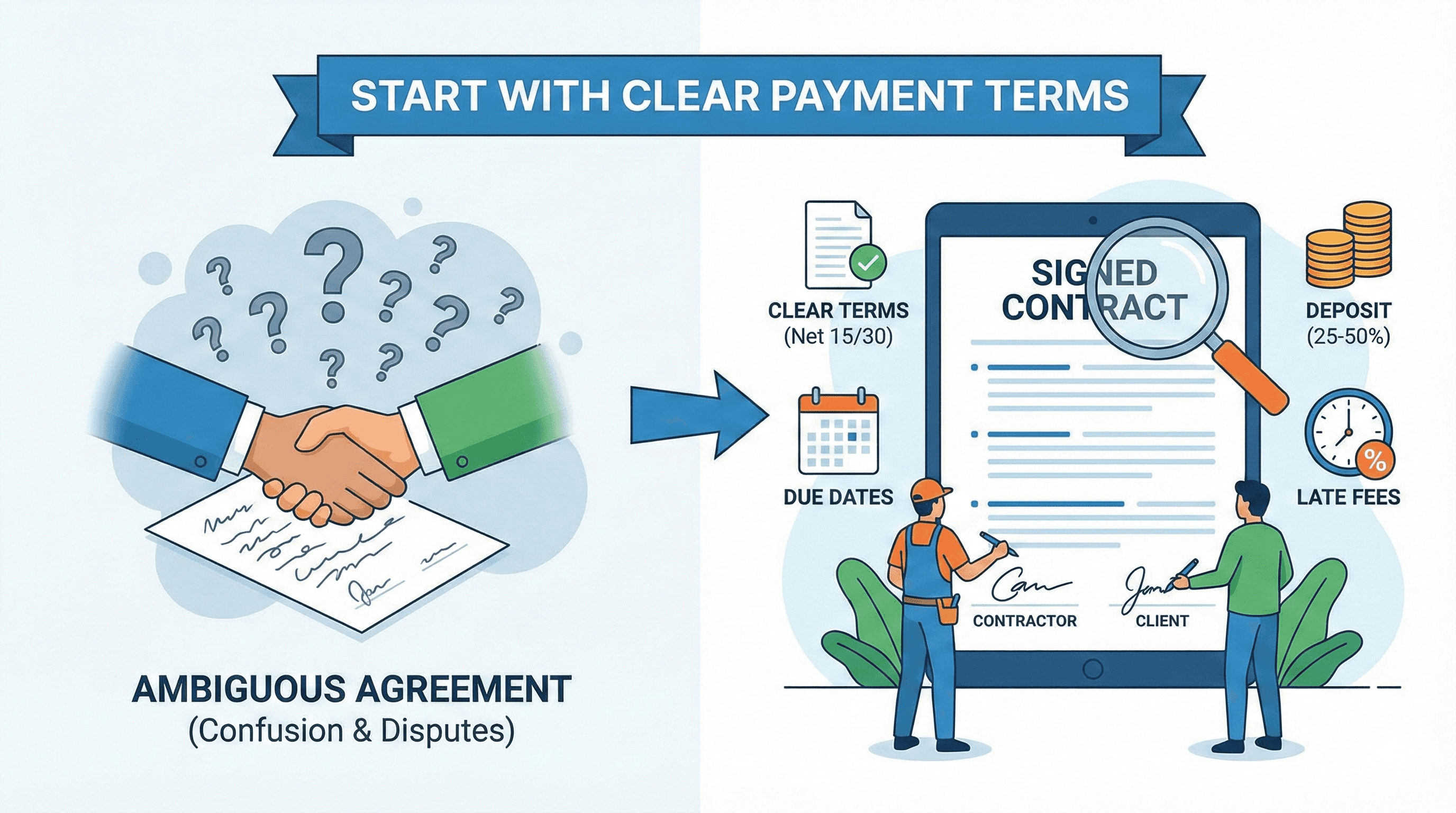
Payment disputes often begin before the first wrench is turned. Ambiguous contracts and verbal agreements create confusion about what is owed and when payment is due. Trade contractors should establish crystal-clear payment expectations in writing before starting any job.
Your contract should specify exact payment terms, including due dates, acceptable payment methods, and consequences for late payment. Net 30 payment terms are most commonly used across industries, though many trade contractors prefer shorter windows like Net 15 to improve cash flow. Construction and HVAC work typically carries longer payment terms of 30 to 90 days, but smaller service jobs should have tighter deadlines.
Consider requiring deposits for larger projects. Industry data shows that contractors typically request 25% to 50% upfront, especially for jobs requiring material purchases or custom work. This protects your business from financing the project out of pocket and demonstrates customer commitment. For projects spanning multiple weeks or months, milestone-based billing ensures steady cash flow by triggering payments as you complete specific phases of work.
Payment terms should also address late fees and interest on overdue balances. These penalties, clearly stated upfront, deter clients from delaying payments and compensate you for the cash flow disruption. Just as importantly, require customers to sign contracts acknowledging these terms before you begin work. Establishing a requirement that contracts are signed before services are provided is a key component of an effective accounts receivable process.
Invoice Immediately After Job Completion
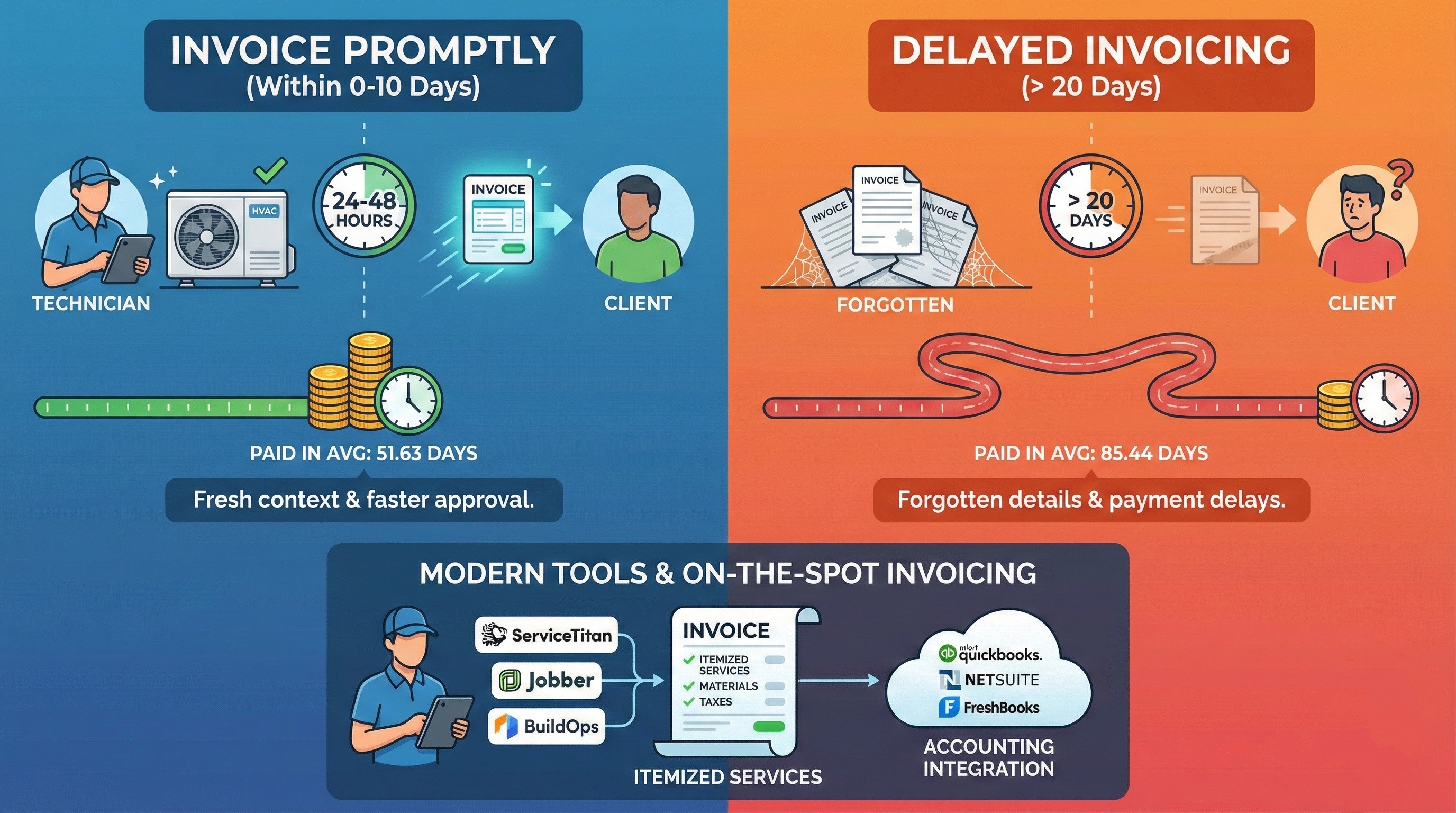
Timing matters enormously when it comes to getting paid. Field service data reveals a striking pattern: contractors who send invoices within 0 to 10 days of completing a job get paid in an average of 51.63 days, while those who wait more than 20 days see payment times balloon to 85.44 days.
The message is clear. Invoice promptly, ideally within 24 to 48 hours of finishing the work. Fresh context helps processing and keeps cash flowing into your business. Clients remember the details of recently completed work, making them less likely to dispute charges or delay approval.
For small-scale jobs where customers remain on-site, consider on-the-spot invoicing. Services such as plumbing, HVAC, and electrical work can adopt immediate invoicing methods when clients stay on-site, which makes same-day payment possible. This eliminates the waiting period entirely and turns every service call into instant revenue.
Your invoices should be detailed and accurate, leaving no room for confusion. Include your company name and contact information, a unique invoice number, the invoice date, and a specific due date. Itemize services provided, hours worked, materials used, and applicable taxes so clients can see exactly what they are paying for. Transparency reduces disputes and speeds approvals.
Modern field service management software like ServiceTitan, Jobber, or BuildOps allows technicians to generate invoices in the field and send them immediately upon job completion. These platforms often integrate with QuickBooks, NetSuite, FreshBooks, or other accounting systems, ensuring that financial records stay synchronized without double data entry.
Implement a Systematic Follow-Up Process
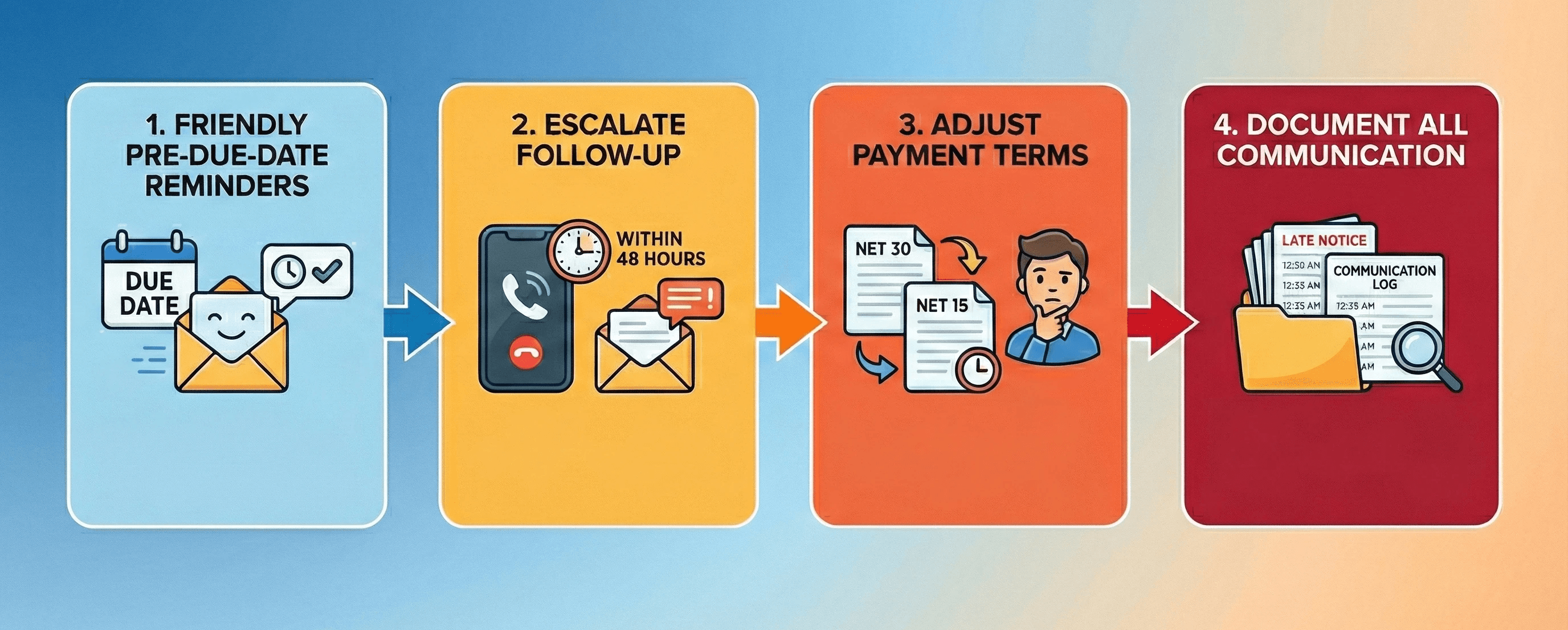
Even with clear terms and prompt invoicing, some customers will pay late. Rather than hoping for the best, establish a systematic follow-up process that ensures overdue invoices do not slip through the cracks.
Start with friendly pre-due-date reminders. Send reminders before the due date to ensure clients are aware of their upcoming payments. This proactive approach prevents genuine oversights and shows professionalism. Automated email reminders work well for this purpose and require minimal effort on your part.
When payments become overdue, escalate your follow-up approach. Begin with a polite phone call or email within 48 hours of the missed deadline. If an invoice goes past due, quick follow-up within 48 hours can often resolve the issue. Keep communication clear, firm, and professional to avoid unnecessary escalation.
For customers who consistently pay late, consider adjusting their payment terms. If one client often pays late, you might want to change their terms to Net 15 instead of Net 30. This incentivizes timely payment and protects your business from repeated disruptions.
Document all communication related to overdue payments. Sending notices of late invoices provides a valuable paper trail so you are prepared if you need to escalate the matter later. This documentation becomes essential if you ultimately need to pursue legal remedies or file a lien.
Offer Multiple Convenient Payment Options
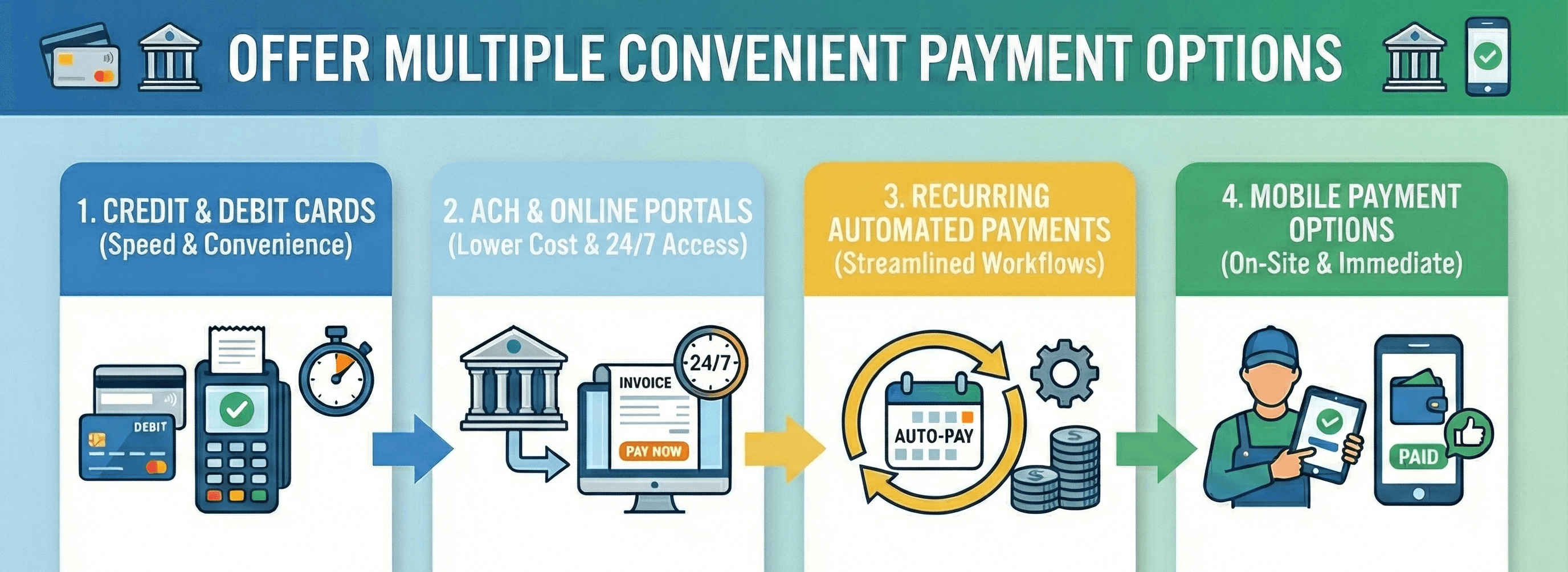
Payment friction costs you money. When customers cannot easily pay using their preferred method, they delay payment or abandon it altogether. Trade contractors should remove these obstacles by accepting multiple payment types.
Credit and debit card payments are essential. While you will pay processing fees (typically around 3%), accepting card payments helps maintain positive cash flow and builds strong client relationships. Customers appreciate the convenience, and you receive payment faster than waiting for checks to clear.
ACH (Automated Clearing House) bank transfers offer a lower-cost alternative with fees typically under 1%. Online payment portals allow customers to view invoices and make payments 24/7, delivering the digital experience modern business customers expect.
For regular clients, consider setting up recurring automated payments. This streamlines back-office workflows for maintenance contracts or ongoing service agreements, ensuring you receive payment on schedule without manual intervention.
Mobile payment options are particularly valuable for field technicians who complete work on-site. Field service payment software allows technicians to process payments immediately after job completion, capitalizing on peak customer satisfaction and eliminating the lag between service and payment.
Know Your Legal Protections and Lien Rights
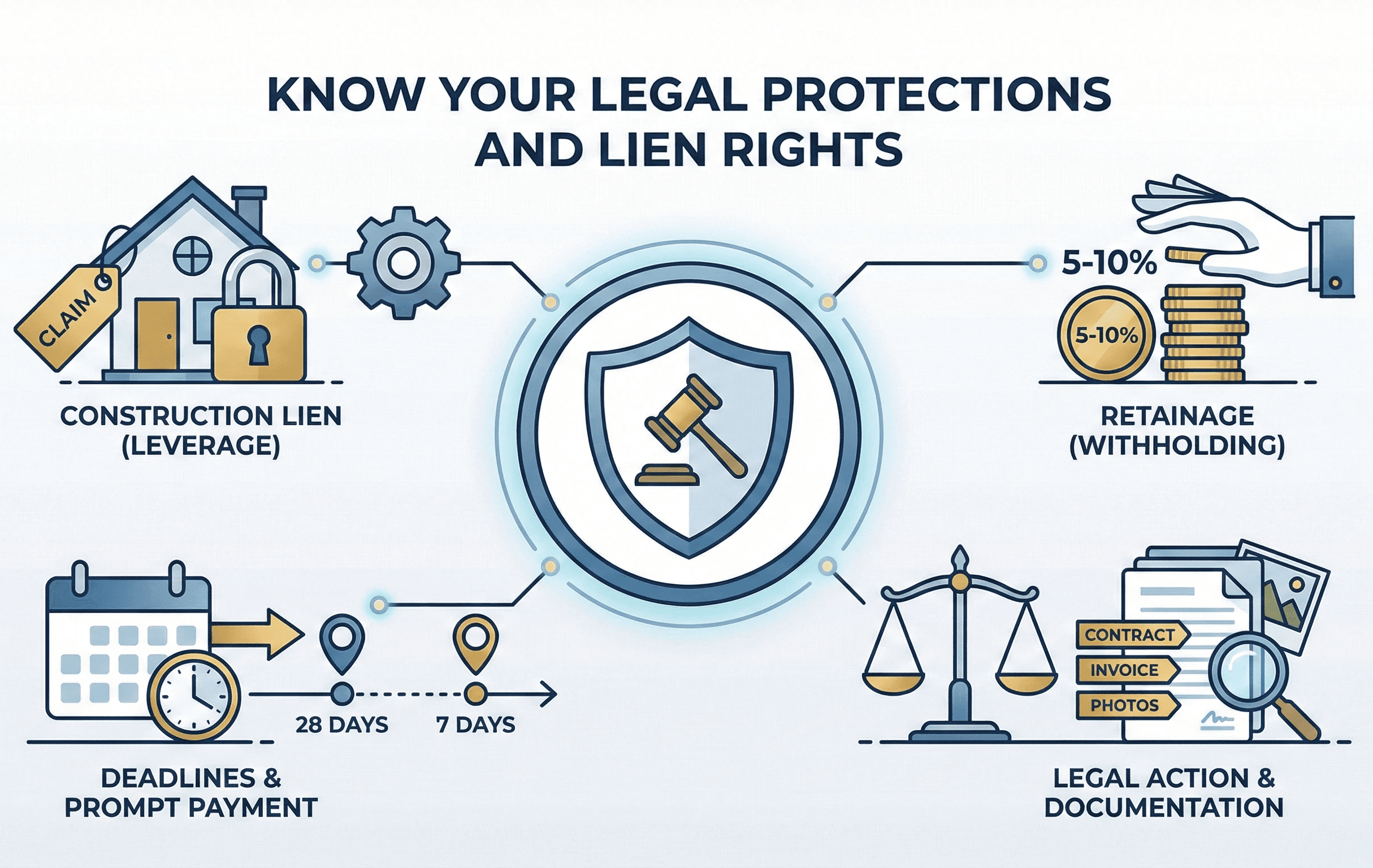
When all else fails, trade contractors have legal remedies available to recover payment for completed work. Understanding these protections before problems arise helps you act decisively when customers refuse to pay.
Construction liens (also called mechanic's liens) provide a legal claim against the property where you performed work. This powerful tool gives contractors leverage to collect outstanding debts because property owners cannot sell or refinance until the lien is satisfied.
Lien rights and filing deadlines vary by jurisdiction. In Ontario, for example, contractors must register their lien within 60 days of substantial performance or contract completion. Other regions have different timelines and requirements, so consult with a construction lawyer familiar with your local laws before filing.
Some jurisdictions have implemented prompt payment legislation designed to protect contractors. These laws mandate specific payment timelines, such as requiring owners to pay contractors within 28 days and contractors to pay subcontractors within 7 days of receiving payment. Understanding your rights under these statutes helps you identify when customers violate legal obligations.
Retainage (the practice of withholding a percentage of payment until project completion) is common in construction but typically ranges from 5% to 10%. If you work as a subcontractor, be aware that owners and general contractors must hold back these amounts and release them according to statutory deadlines after substantial completion.
Before pursuing legal action, consider whether the cost and time investment make sense. For smaller unpaid invoices, mediation or arbitration may be less costly and time-consuming than a lawsuit. However, for larger amounts or repeat offenders, filing a lien or taking the customer to court protects your business and sends a clear message about payment expectations.
Remember that legal protections work best when you have thorough documentation. Maintain signed contracts, detailed invoices, proof of work performed (including photos), and records of all communication. This paper trail becomes crucial evidence if you need to enforce your lien rights or pursue collections.
Leverage Accounts Receivable Automation
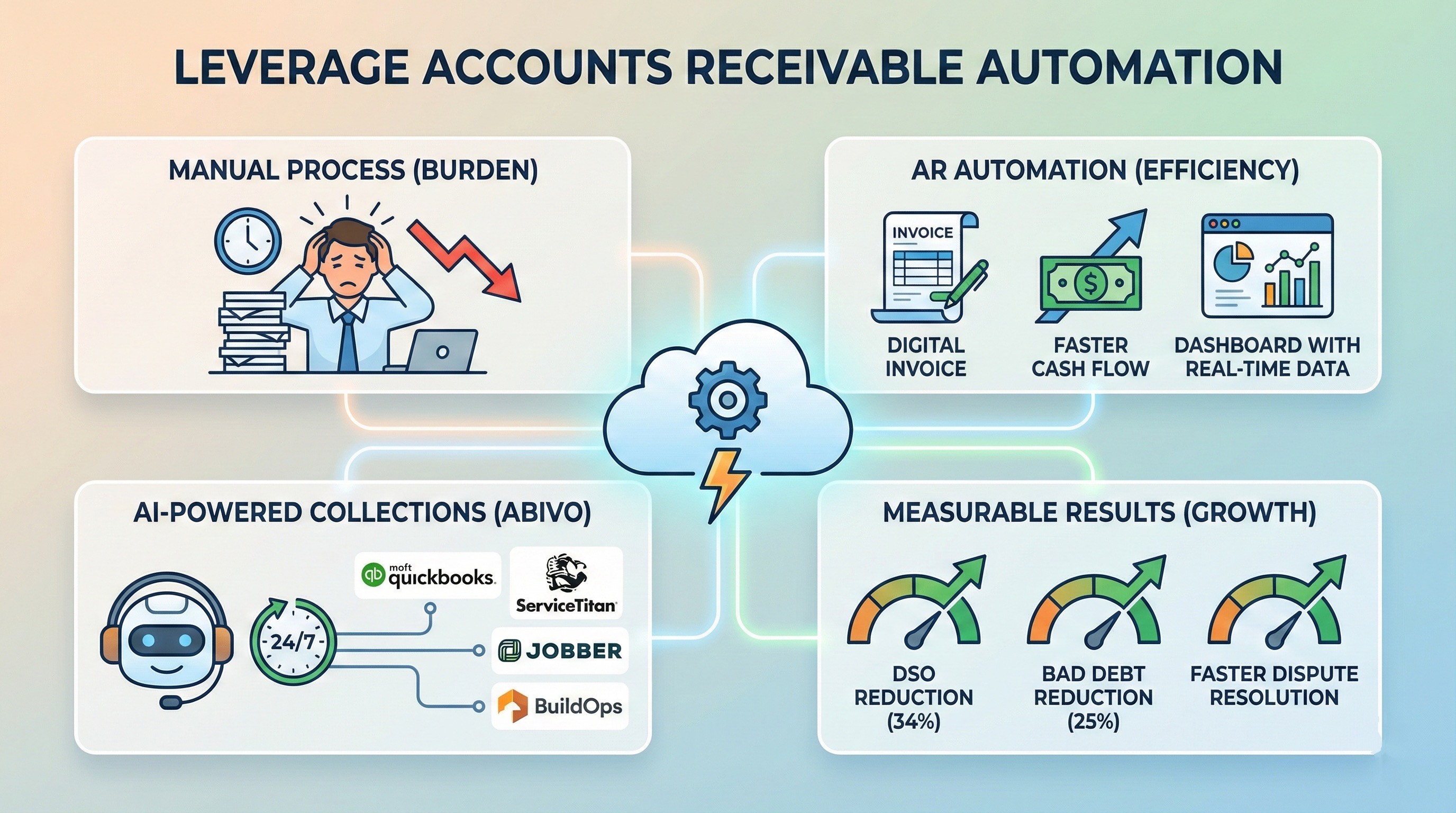
Manual invoicing and payment tracking consume valuable time that trade contractors could spend on revenue-generating activities. Accounts receivable automation eliminates this administrative burden while accelerating cash flow and reducing errors.
AR automation software dramatically reduces processing costs while accelerating cash flow, often helping companies get paid faster. Modern platforms handle everything from invoice generation and delivery to payment reminders and reconciliation. For trade contractors producing hundreds of invoices monthly, this automation becomes essential for sustainable growth.
The benefits extend beyond time savings. Automated systems improve customer satisfaction and team productivity by streamlining payments and eliminating manual tasks. They also provide real-time visibility into receivables, with dashboards showing exactly which invoices are outstanding, which customers consistently pay late, and where cash flow bottlenecks exist.
AI-powered collection systems deliver even more impressive results. Recent research shows that AI-powered collection systems achieve 47% higher recovery rates while reducing operational costs by up to 80%. These platforms operate around the clock, maintain consistent communication with customers, and personalize outreach strategies based on payment behavior patterns.
For trade contractors, this means tools like Abivo can handle the heavy lifting of accounts receivable management. Abivo's AI calling and email agents automatically follow up on outstanding invoices, send payment reminders at optimal times, and escalate collection efforts when needed. The platform integrates seamlessly with the accounting and field service management software that HVAC, plumbing, and electrical contractors already use, including QuickBooks, ServiceTitan, Jobber, and BuildOps.
Teams that automate their accounts receivable process typically see a 34% reduction in Days Sales Outstanding (DSO), a 25% reduction in bad debt, and disputes resolved three weeks faster than before automation. For small trade service businesses operating on tight margins, these improvements can mean the difference between thriving and struggling to keep the doors open.
Automation is particularly valuable for contractors managing cash flow across multiple concurrent projects. Instead of juggling spreadsheets and chasing down payments manually, the system handles routine follow-ups while flagging high-priority accounts that need personal attention. This allows business owners to focus on delivering excellent service and growing their customer base rather than functioning as their own collections department.
Practical Takeaways for Trade Contractors
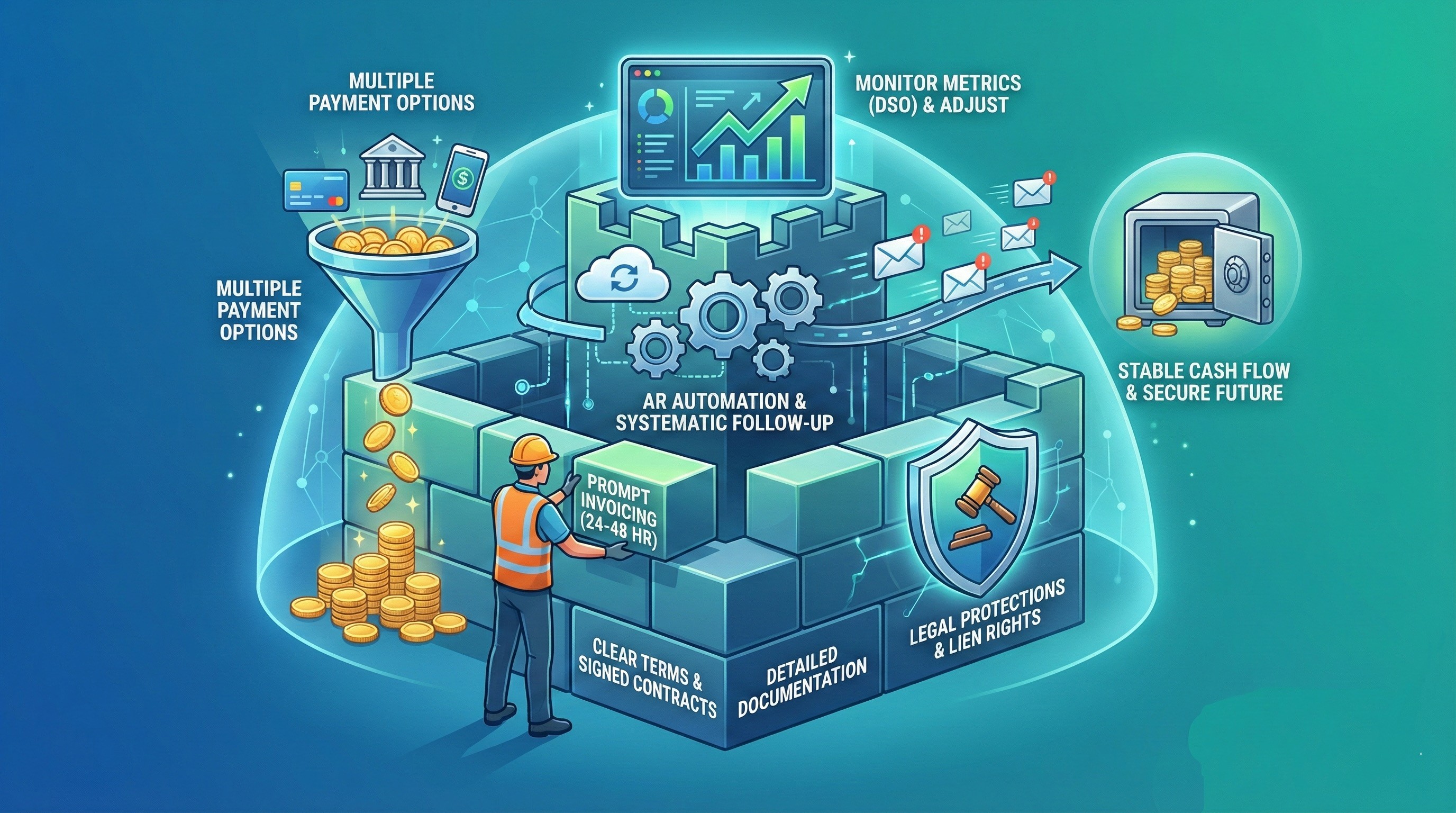
Getting paid promptly requires intentional systems and consistent execution. Here are the key actions every plumbing, electrical, and HVAC contractor should implement:
Establish clear written payment terms before starting work. Specify due dates, acceptable payment methods, late fees, and deposit requirements. Have customers sign contracts acknowledging these terms.
Invoice within 24 to 48 hours of job completion. Data shows this dramatically reduces payment times compared to delayed billing. Use field service software to generate and send invoices from job sites.
Implement systematic follow-up processes. Send pre-due-date reminders, escalate to phone calls for overdue accounts, and document all communication. Automated systems ensure nothing falls through the cracks.
Accept multiple payment methods. Credit cards, ACH transfers, and online payment portals remove friction and accelerate collections. The convenience fees are worth the improved cash flow.
Understand your lien rights and legal protections. Know the filing deadlines and requirements in your jurisdiction. Consult with a construction attorney when customers refuse to pay for completed work.
Consider AR automation for consistent results. Platforms that automate invoicing, payment reminders, and collections reduce administrative burden while improving recovery rates and cash flow.
Monitor key metrics like Days Sales Outstanding. Track how long it takes to collect payment and identify customers with chronic payment issues. Use this data to adjust payment terms or require deposits from risky accounts.
Maintain detailed documentation. Keep signed contracts, itemized invoices, proof of work completed, and communication records. This paper trail protects you in disputes and strengthens collection efforts.
Building a Sustainable Payment System
For trade service businesses, effective accounts receivable management is not optional. It is the foundation of financial stability. When contractors implement clear payment terms, invoice promptly, follow up systematically, and leverage modern automation tools, they transform their relationship with cash flow. Instead of constantly scrambling to cover payroll and materials, they build predictable revenue streams that support business growth.
The strategies outlined here work because they address the root causes of payment problems rather than just reacting to late payments. Clear contracts prevent misunderstandings. Immediate invoicing capitalizes on fresh context and customer satisfaction. Systematic follow-up catches issues early. Multiple payment options remove friction. Legal protections provide leverage when needed. And automation ensures consistent execution without consuming all your time.
Trade contractors who implement these practices report fewer payment disputes, faster collections, and the breathing room to focus on delivering excellent service rather than chasing down money owed to them. In an industry where nearly half of skilled trades businesses cite material costs and cash flow as top concerns, getting paid promptly is not just good business practice. It is essential for survival.