Selling to Big Companies? How to Navigate Their Slow-Pay Systems and Get Paid Faster
Big companies and government agencies often pay slowly. Learn practical AR strategies to protect cash flow without damaging the relationship.

Sia Ghazvinian
Co-Founder & CEO

Table of contents
Share
Working with large companies or government agencies can feel like a double-edged sword for small vendors. On one hand, landing a big client can bring stability and prestige. On the other, their slow and bureaucratic pay systems often stretch your cash flow and strain your accounts receivable (AR) process. Invoices that you expect to be paid in 30 days may linger 60, 90, or even longer before hitting your bank account. This is frustrating, and it’s one of the realities of doing business with organizations that have formal procurement, invoicing, and payment cycles.
The good news is that small businesses can succeed in this environment by understanding what causes payment delays and adjusting their AR practices accordingly. In this article you’ll find practical, actionable advice for working with slow-pay clients and safeguarding your cash flow without damaging the relationship.
Why Big Clients Pay Slowly

Big companies and government clients have complex internal processes that slow down payment:
Procure-to-Pay (P2P) pipelines are structured
Invoices typically travel through multiple checks, validations, and approvals before payment is released. These steps protect the enterprise, but each layer adds days or weeks to the cycle. Often invoices must be matched to purchase orders and delivery confirmations before they are processed.
“Pay-when-paid” clauses exist in contracts
Some enterprises include contractual language that says they will pay you after they’re paid by their client or after another milestone. This can stretch your effective payment window without technically violating terms you thought you had agreed to.
Large clients schedule bulk payments
Instead of paying invoices as they arrive, some organizations batch payments on a particular day of the month. If your invoice misses that cut-off, it sits until the next cycle.
Government payment terms vary widely
Public sector pay cycles are often fixed and tied to budget cycles, which means payments can lag for 30, 60, even 90 days despite your contract language.
These patterns are not personal. They’re often systemic and built into how big organizations manage risk and budgets. Understanding this lets you plan rather than react.
Contracts and Terms: Set Expectations Early
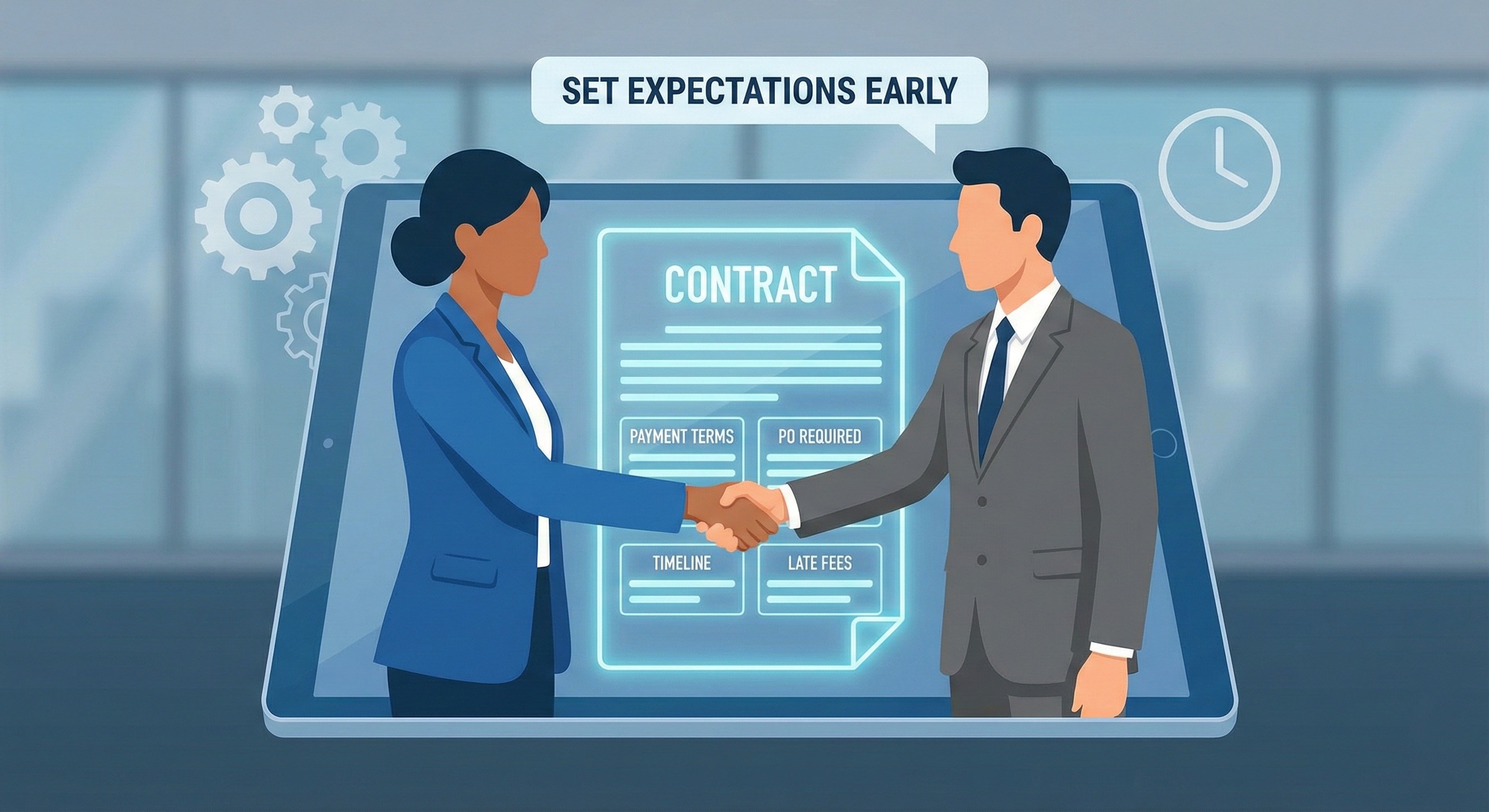
One of the strongest levers you have is a well-structured contract:
Negotiate clear payment terms upfront.
Large clients expect to negotiate terms, but you still get a say. Make sure terms like Net 30, Net 45, or whatever you agree on are written and signed.
Request a purchase order (PO).
For many enterprises and government agencies, a PO is a required legal document before they process an invoice. Include the PO number on invoices so they don’t get redirected back to you for more information.
Clarify payment methods and timelines.
Ask what their internal payment schedule looks like and build that into your expectations. Some organizations will tell you the date of the next run of accounts payable once they receive an invoice. Knowing the “real” cycle helps you forecast cash flow.
Include consequences for late payment.
Penalties or interest are more enforceable when agreed upon in the contract. Some businesses find that even politely reminding large clients of these terms can encourage them to prioritize payment.
Contracts are not just legal shields. They shape behavior and set your standards from day one.
Invoice Accuracy and Timing Matter

Simple invoice mistakes can completely reset a large client’s processing clock:
Ensure invoices are perfectly accurate.
Check that names, addresses, PO numbers, and amounts are correct. Errors give the client an easy excuse to delay payment.
Send invoices promptly and electronically where possible.
Delaying even a day in sending the invoice often means missing the client’s next payment cycle. Many big organizations prefer electronic submission formats or integrated billing platforms.
Include all required documentation.
For enterprise and government clients, this might mean delivery confirmations, receipts, or compliance certificates. If any supporting document is missing, their system may reject or hold your invoice for clarification.
Know their billing calendar.
Asking an AP contact about cut-off dates for processing can improve your timing so invoices are paid in the next batch instead of waiting another cycle.
Getting these basics right doesn’t guarantee fast payment, but it removes common reasons for unnecessary delays.
Communication: Follow Up Strategically
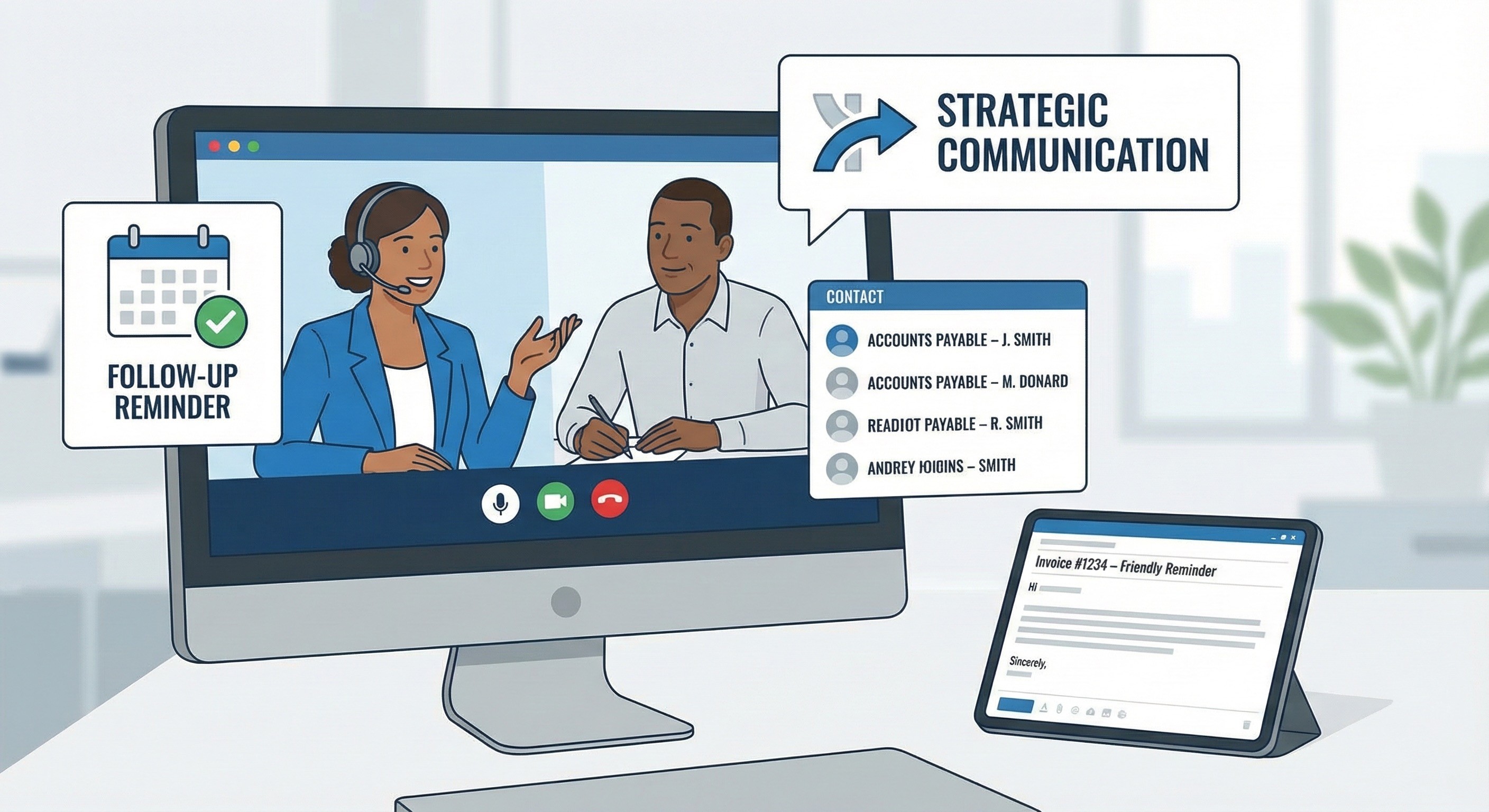
When dealing with large clients, communication should be strategic rather than reactive.
Build relationships with the right contacts.
Identify who in the accounts payable or procurement department handles your invoices. Getting a real person on your side helps you resolve issues faster.
Follow up early and often.
Don’t wait until the invoice is overdue to reach out. A friendly reminder a few days before the due date and another on the due date keeps your invoice top of mind. Automating reminders can take the guesswork out of this.
Stay professional and persistent.
When a payment is late, follow up with a factual email, then escalate to a phone call if needed. In large organizations, sometimes a gentle nudge from the right person speeds up the internal process.
Escalate through formal channels if necessary.
If your normal contact isn’t responsive, don’t hesitate to leverage your contract manager or a senior ally at the client to help move the process.
Communication should feel consistent and professional, not adversarial.
Offer Incentives and Structure Payments
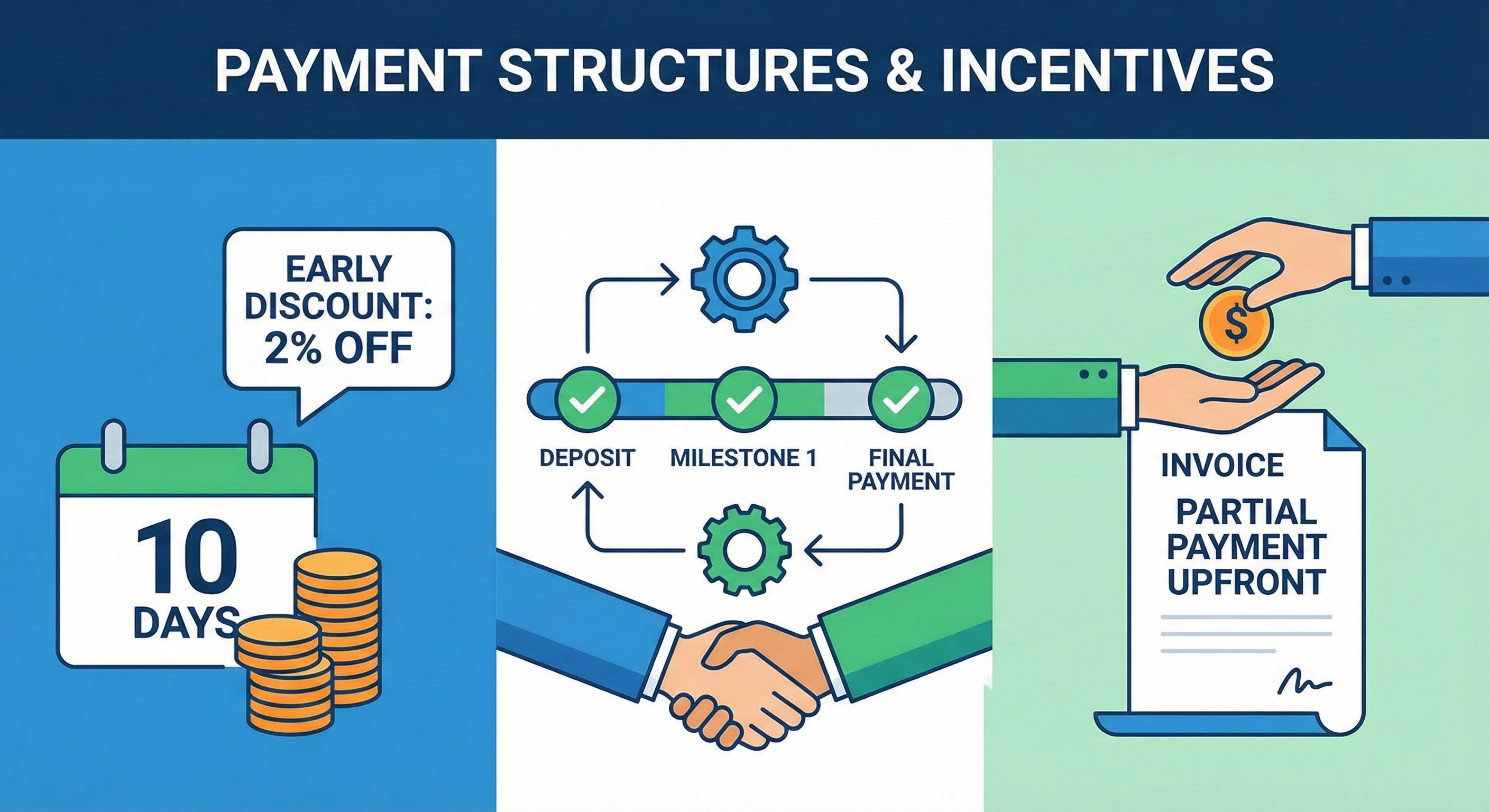
Sometimes changing the incentive makes a slow payer more responsive.
Offer early payment discounts.
A small discount for payment within a shorter period can make a big difference in practice. Many vendors offer 1 to 2% off if paid within 10 to 15 days, which can be worth the faster cash flow.
Break large invoices into milestones.
For big projects, splitting invoices into progress payments tied to deliverables keeps cash flowing rather than waiting until the end of the project.
Ask for deposits or partial payment upfront.
If the work is large or long-term, a deposit before starting ensures you aren’t financing the project entirely on credit.
These tactics align your needs with the client’s internal incentives.
Financial Tools to Bridge the Gap
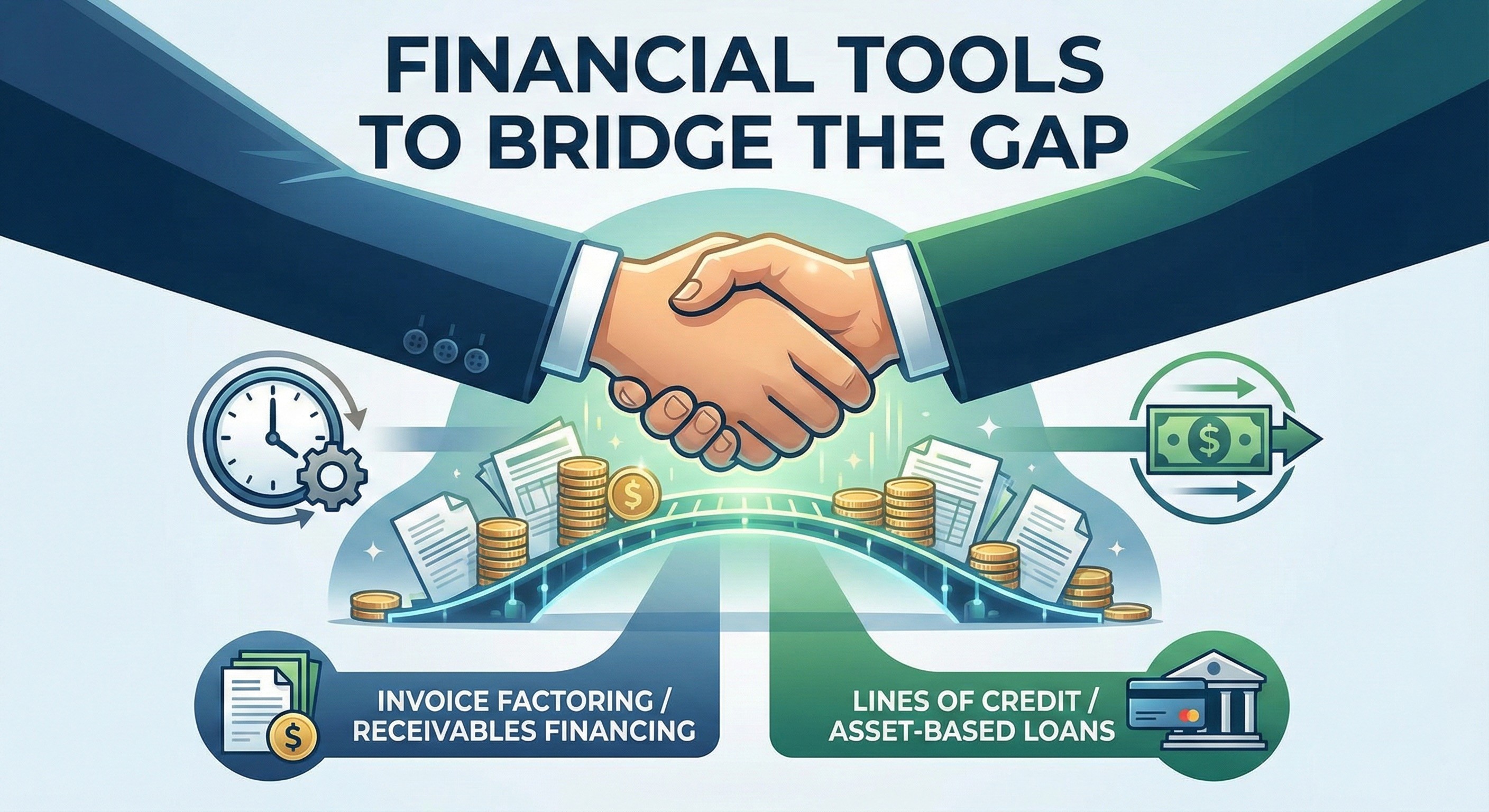
Even with great AR practices, slow pay cycles can strain your working capital. There are financial tools that can help:
Invoice factoring or receivables financing
You can sell your unpaid invoices to a lender for quick access to most of the invoice value, and they handle collection. This gives you immediate liquidity even if the client pays on their slow schedule.
Lines of credit or asset-based loans
If you regularly work with slow pay clients, having a credit line secured against your receivables can help you manage cash flow without disrupting operations.
These options have costs, so weigh them against the impact of waiting 60 to 90+ days for payment.
Protect Your Cash Flow Without Losing the Client
Big clients don’t intend to hurt small vendors, but their systems can inadvertently do so. Protecting your cash flow while preserving the relationship requires a mix of clear contracts, accurate invoices, strategic communication, thoughtful incentives, and sometimes financial backup plans. When you put these practices in place, slow pay systems become manageable business realities instead of cash-flow crises.
Practical Takeaways
Get payment terms and requirements in writing before you start work.
Ensure invoices are accurate, complete, and submitted on time.
Build relationships with key accounts payable contacts and follow up consistently.
Incentivize fast payment through discounts or payment structure.
Consider invoice factoring or receivables financing to bridge slow pay cycles.