
The Remote Work Revolution: Effects on Finance Teams and AR Processes
Remote and hybrid work is reshaping accounts receivable. Learn how cloud tools, automation, and intentional communication help distributed finance teams maintain efficiency, visibility, and cash flow.

Soham Gawde
Business Analyst

Table of contents
Share
Remote and hybrid work models are here to stay across industries, and finance teams are no exception. What began as a necessity during the COVID-19 pandemic has turned into a lasting shift in how companies operate. In accounting and finance functions, including accounts receivable (AR), these changes are reshaping workflows, communication, team dynamics, and the way businesses engage with customers.
This article explores how the remote work revolution affects AR processes, what that means for your team’s efficiency and cash flow, and how finance leaders can adapt to get better outcomes in a distributed world.
The Shift Toward Remote and Hybrid Finance Teams
Remote and hybrid work models have become widespread in accounting and finance. Many firms now allow staff to work from home at least part of the time, and a significant percentage of professionals prefer hybrid arrangements for flexibility and work-life balance.
In fact, roughly two-thirds of accounting professionals see hybrid work as a lasting change, and many firms have increased the use of cloud-based systems and digital workflows to support distributed teams.
These changes have a direct effect on how AR teams operate because traditional tasks that once depended on paper, face-to-face collaboration, or centralized offices must now function smoothly in remote environments.
Remote Work’s Impact on AR Workflows
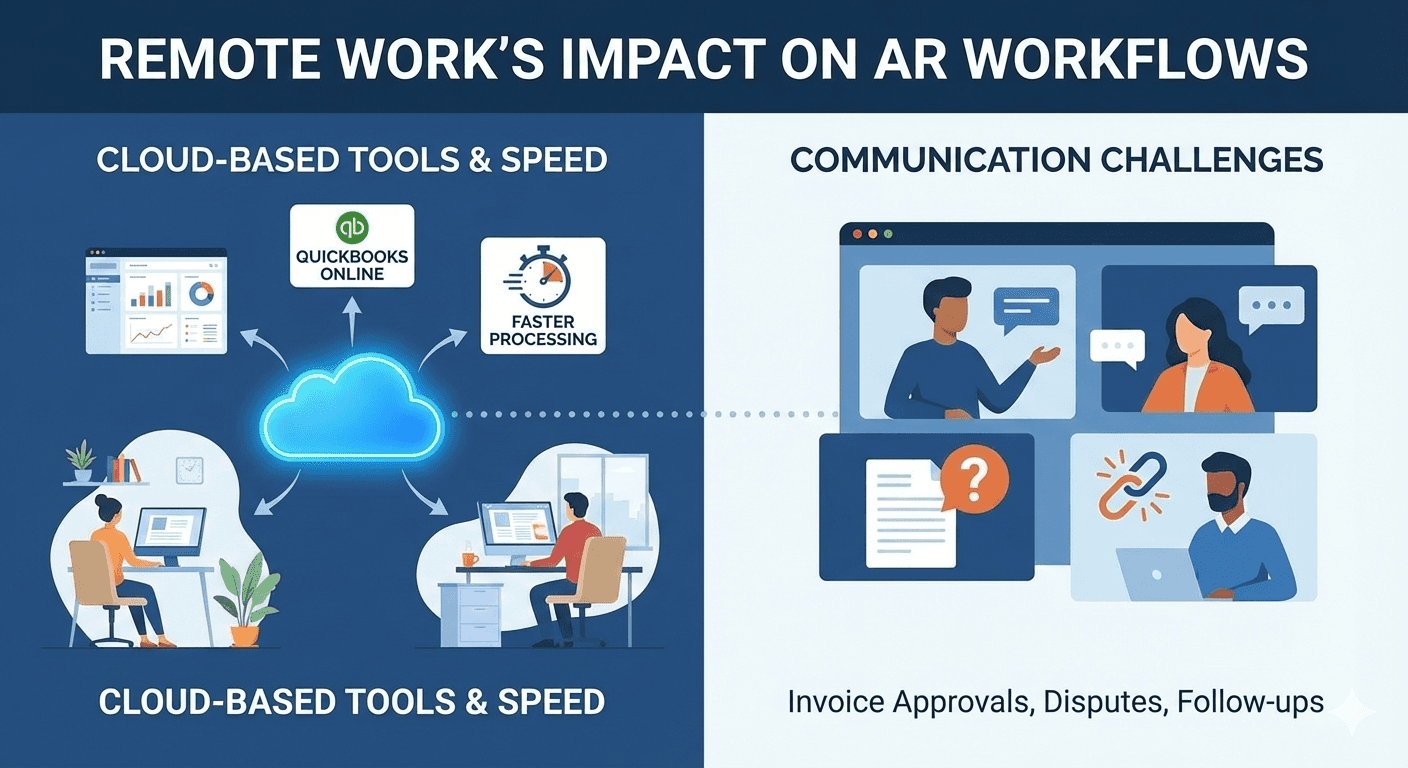
When your AR team is distributed, the way people issue invoices, follow up on overdue payments, and coordinate collections changes dramatically. Here’s how remote work is reshaping these core AR activities.
Greater Reliance on Cloud-Based Tools
Remote AR teams depend heavily on cloud accounting platforms and AR systems that let staff access data from anywhere. Tools such as QuickBooks Online, NetSuite, Xero, and other cloud-based systems provide real-time access to invoices, payment status, aging reports, and customer data. This helps teams issue invoices, monitor payments, and collaborate without needing a physical office.
This shift also means finance functions must standardize processes and ensure single sources of truth for financial data so that team members aren’t working from different versions of spreadsheets or outdated records. Without this alignment, errors in billing or reconciliation can slip through more easily in remote settings.
Faster, More Digital Invoice Processing
Remote work has helped some finance teams improve productivity. According to industry data, digital workflows have enabled remote finance teams to process invoices about 15 percent faster than traditional in-office models.
Part of this increase comes from digitizing workflows that were previously dependent on physical documents, paper approvals, or in-person sign-offs. When invoices and corrections can be issued, reviewed, and approved electronically, the AR cycle becomes more efficient and transparent across locations.
Communication and Collaboration Challenges
Even as productivity rises, remote work changes how teams communicate. Finance teams working remotely rely on video conferencing, chat tools, and document sharing to coordinate approvals, review exceptions, and solve problems. This requires intentional communication practices to avoid misunderstandings or missed follow-ups.
In AR specifically, delayed communication can slow down:
**Invoice approvals
Clarifications about billing disputes
Follow-ups on late payments
Internal escalation processes**
Lack of synchronous communication can lead to gaps where invoices or reminders fall through the cracks, hurting cash flow.
Remote Work and Customer Interactions
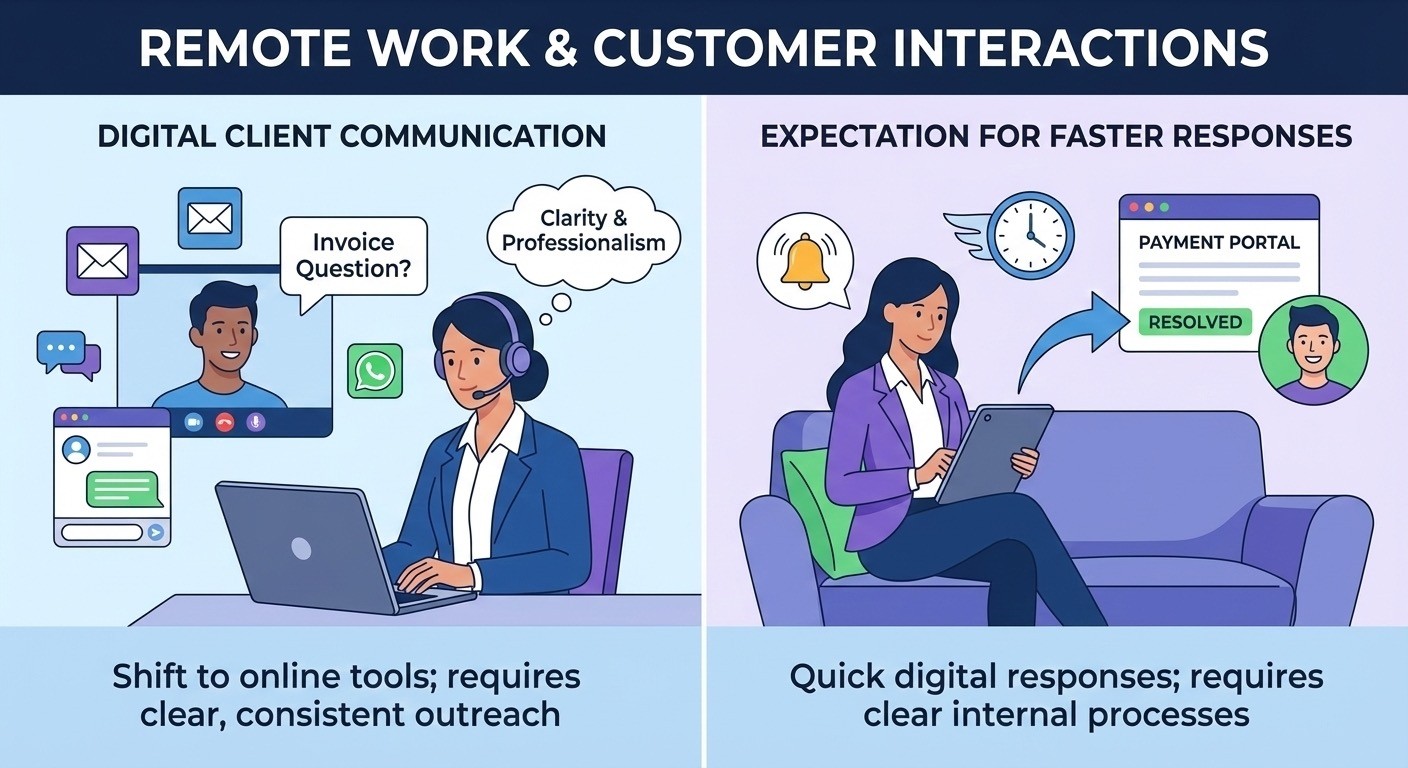
Remote work doesn’t just affect internal teams. It also changes how finance professionals interact with customers.
Digital Client Communication
Traditional face-to-face conversations with customers about payment terms, disputes, or collection notices have shifted online. Tools like email, virtual meetings, and messaging platforms make it easier to reach customers quickly regardless of location. But they also require clarity and professionalism in written communication to avoid confusion.
This is especially true in AR, where customers may have questions about invoices, need clarification on services rendered, or want confirmation of payment terms. Remote-friendly communication tools give finance teams flexibility, but they also place a premium on clear, timely, and consistent outreach.
Expectation for Faster Responses
Remote work has made it easier for finance professionals to respond to client inquiries quickly. With digital notifications and access to systems from anywhere, teams can answer questions or resolve issues without waiting to be in the office. This can improve customer experience and reduce the likelihood of late payments.
However, it requires establishing clear internal processes and response expectations, so no member of the remote team misses communication that affects receivables.
The Role of Automation in Remote AR
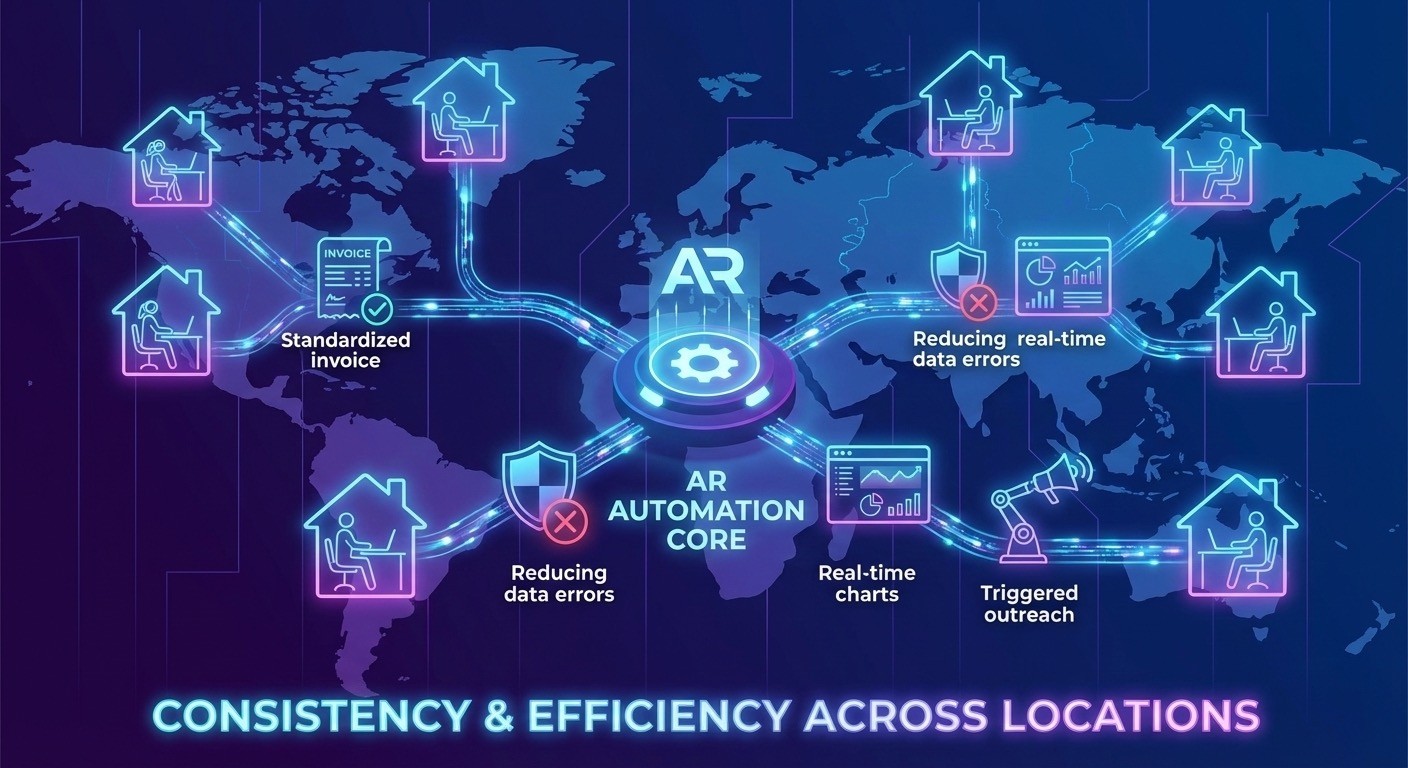
Remote work and automation go hand in hand. Distributing your team across locations makes manual processes harder and more error-prone. Digital tools and automation help fill the gaps.
Industry insights suggest finance leaders are embracing automation partly to offset the challenges that come with remote work, including staffing constraints and manual processing burdens.
For AR teams working remotely, automation can:
Standardize invoice delivery and follow-up reminders
Reduce manual data entry errors
Provide real-time dashboards and visibility into collections
Trigger consistent outreach based on rules, not manual schedules
AP and AR automation help distributed teams maintain consistency in workflows, even when staff are spread across time zones or working asynchronously. This improves efficiency and reduces the risk that overdue invoices linger because a team member didn’t see an email or missed a manual task.
Managing Remote AR Productivity and Visibility
One of the biggest concerns for leaders managing remote finance teams is visibility into what work is getting done and how efficiently it’s flowing.
Companies that support remote finance model success measure productivity by output and process performance, not location. In fact, many finance professionals report equal or higher productivity when working remotely, and remote tools can help shorten cycles like month-end close or invoice processing.
Visibility matters in AR for things like:
Days Sales Outstanding (DSO) trends
Aging reports
Open disputes or exceptions
Follow-up work queues and coverage
Remote AR teams benefit from dashboards that show this data in real time, so no one is waiting for weekly reports to know where the cash flow picture stands.
Remote Work’s Impact on AR Culture and Team Dynamics
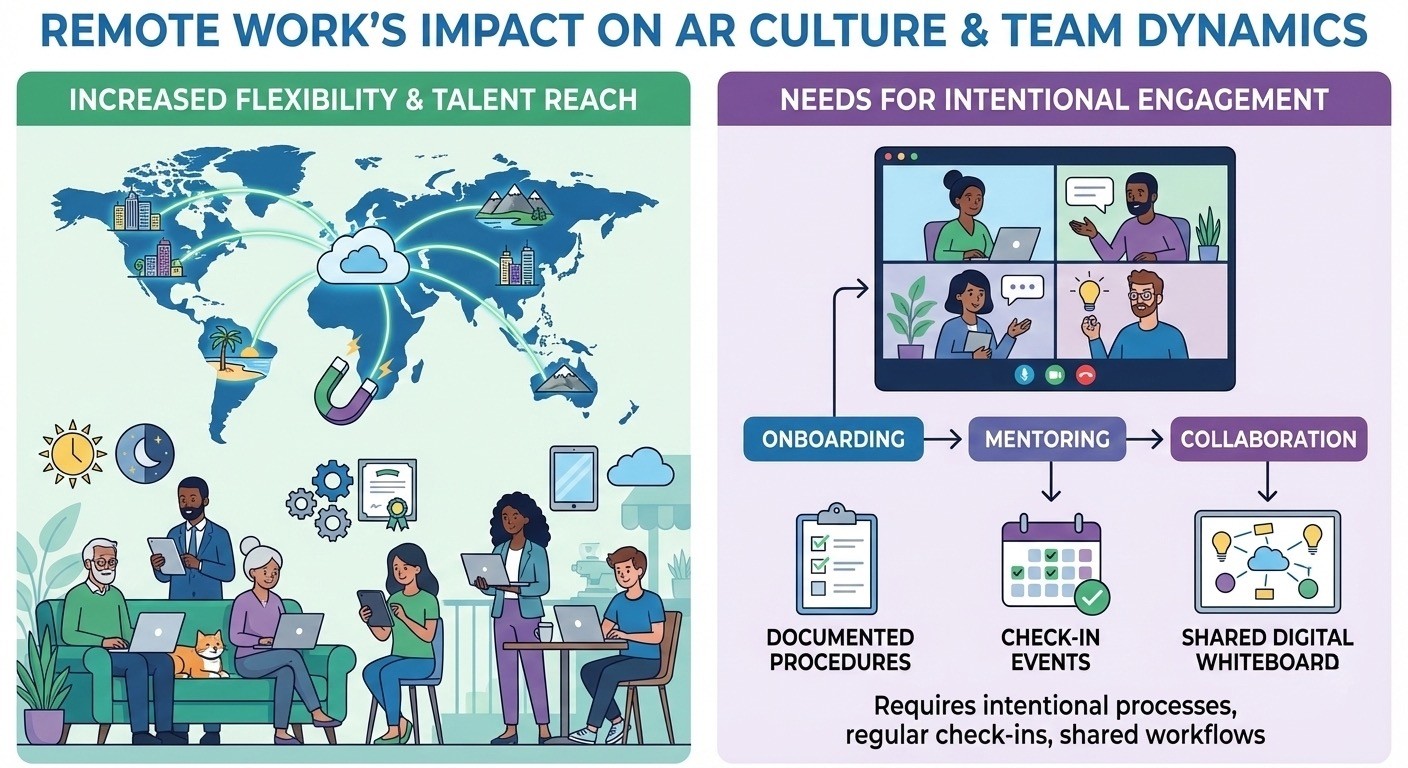
Remote and hybrid models affect how finance teams collaborate and build culture.
Increased Flexibility and Talent Reach
Remote work lets companies hire talent from a wider geography and offer flexible schedules. This can improve retention and help finance teams attract specialized skills that aren’t available locally.
For AR teams, this means access to candidates who understand modern digital workflows and can adapt quickly to cloud tools and automation.
Needs for Intentional Engagement
Without the natural interactions of a physical office, remote teams need intentional processes for onboarding, mentoring, and collaboration. This matters especially for junior AR staff learning nuanced parts of collections or reconciliation.
Regular check-ins, clearly documented procedures, and shared workflows keep distributed teams aligned and prevent knowledge silos or inconsistent practices.
Cybersecurity and Risk Concerns in a Remote AR World
Remote work expands the potential risk surface for finance teams because sensitive financial data may be accessed from multiple locations and devices. Secure systems, strong access controls, and careful onboarding become essential.
Cloud accounting systems and remote communication tools must follow best practices for data protection to safeguard customer information, payment data, and internal AR records. This is especially important for teams handling invoicing and collections remotely, where secure access must be balanced with ease of use.
Practical Steps to Optimize AR for Remote Work
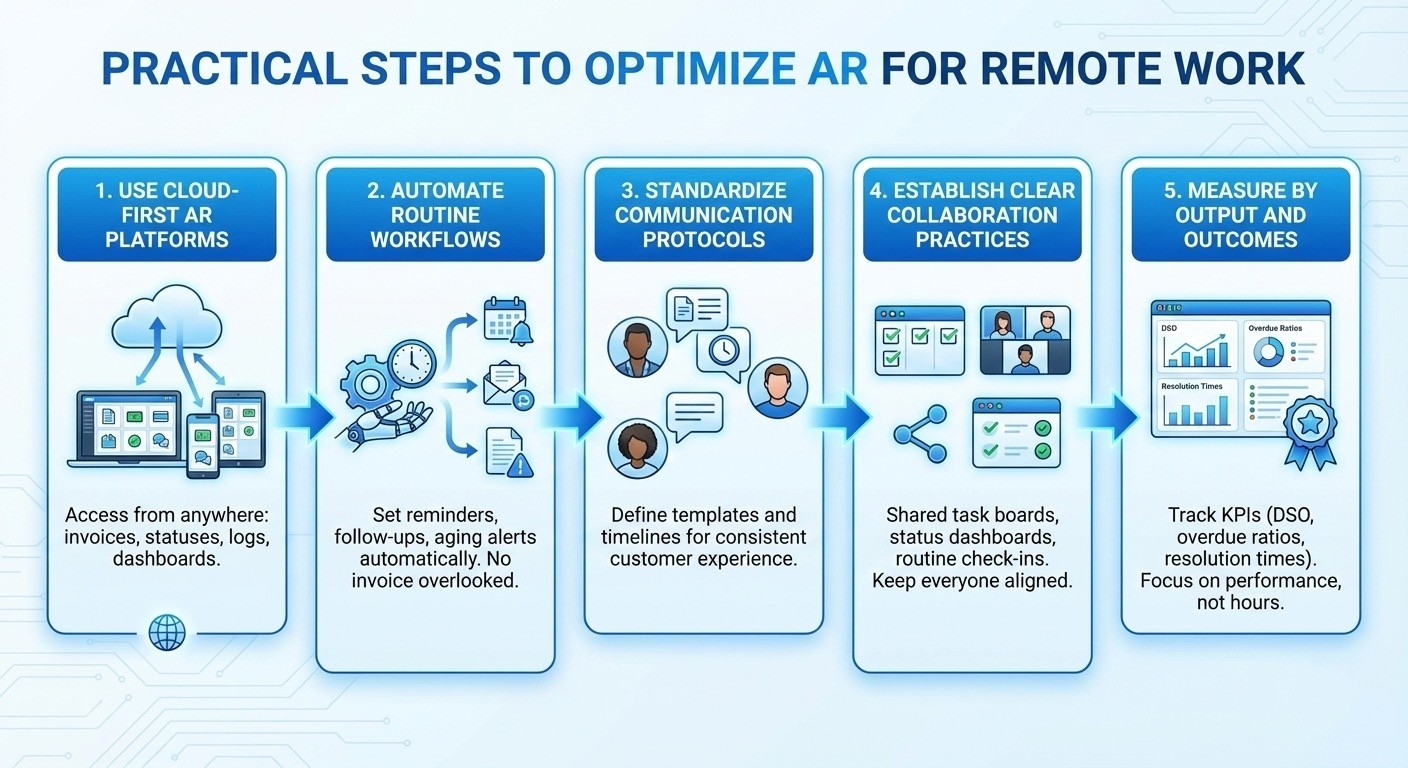
Here are actionable ways to improve your AR operations in the era of distributed teams:
Use Cloud-First AR Platforms
Choose systems that let your team access invoices, payment statuses, customer communication logs, and dashboards from anywhere.
Automate Routine Workflows
Set reminders, follow-ups, and aging alerts that run automatically so no invoice gets overlooked even if team members are distributed.
Standardize Communication Protocols
Define clear templates and timelines for outreach so customers have a consistent experience, regardless of who sends the message.
Establish Clear Collaboration Practices
Use shared task boards, status dashboards, and routine check-ins to keep everyone on the same page with collections tasks.
Measure by Output and Outcomes
Track KPIs like DSO, overdue ratios, and resolution times to evaluate performance, not how many hours someone is online.
Key Takeaways
Remote work is now a long-term reality for many finance and AR teams, driven by preferences for flexibility, talent acquisition, and digital workflows.
Cloud tools and automation are essential for issuing invoices, tracking collections, and coordinating work in a distributed environment.
Communication practices must adapt so that remote teams maintain clarity with customers and internal stakeholders.
AR automation improves consistency and productivity by standardizing repetitive tasks that manual processes struggle to maintain in remote settings.
Culture and engagement require intentional effort to onboard, mentor, and align remote finance professionals.